
Legal
How a Landmark Healthcare Antitrust Case Could Affect Inland Empire Providers, Employers, and Patients


Federal litigation challenging out-of-network reimbursement practices could reshape California’s healthcare landscape and influence how providers are paid for years to come.
INDUSTRY INSIGHT
By Matthew M. Lavin, Jennifer Scullion, and Hunter Shkolnik
A major federal antitrust lawsuit challenging how health insurers reimburse out-of-network medical providers could have far-reaching implications for hospitals, physician practices, employers, and patients throughout the Inland Empire.
The case, In re MultiPlan Health Insurance Provider Litigation, is pending in federal court in Chicago and has become one of the nation’s most closely watched healthcare antitrust lawsuits. Plaintiffs—including the California Medical Association and more than 450 healthcare organizations nationwide—allege that MultiPlan, now operating as Claritev, worked with several of the country’s largest health insurers, including Aetna, Cigna, Elevance, and UnitedHealth, to suppress reimbursement rates for out-of-network medical care.
The defendants deny the allegations, and the litigation remains in the discovery phase. However, several recent court rulings have allowed key claims to proceed, making the case one that healthcare providers and business leaders across California are increasingly watching.
Why It Matters to the Inland Empire
Healthcare is one of the Inland Empire’s largest economic sectors. Major institutions such as Loma Linda University Health, regional hospitals, independent physician groups, specialty practices, urgent care centers, and behavioral health providers collectively employ thousands of people and provide care to one of California’s fastest-growing populations.
For many independent medical practices, reimbursement for out-of-network services represents an important source of revenue. According to the plaintiffs, reimbursement practices challenged in the lawsuit have resulted in payments significantly below competitive market rates, creating financial pressure for providers.
If reimbursement rates remain depressed, healthcare organizations may delay hiring, reduce services, postpone investments, or limit expansion. Those business decisions could ultimately affect patient access to care and the employers whose workforces depend on local healthcare providers.
The Allegations
At the center of the lawsuit is MultiPlan’s role in determining reimbursement recommendations for out-of-network healthcare claims.
According to the plaintiffs, competing insurance companies shared confidential pricing information through MultiPlan, which analyzed the data using proprietary products, including Data iSight and Viant, to generate reimbursement recommendations that insurers allegedly adopted across much of the marketplace.
The plaintiffs contend that this system reduced competition among insurers and resulted in reimbursement rates below what would otherwise exist in a competitive market.
MultiPlan has stated that its platform processes more than 80% of out-of-network claims nationwide. The plaintiffs allege that the reimbursement system resulted in approximately $19 billion in underpayments during 2020 alone, with the financial impact continuing to grow in subsequent years.
The defendants dispute these allegations, and the claims have not been proven in court.
Growing Regulatory Attention
The litigation has also attracted attention from federal and state regulators.
In March 2025, the U.S. Department of Justice filed a Statement of Interest arguing that competitors may violate federal antitrust law by exchanging competitively sensitive pricing information through a third-party intermediary, even if they never communicate directly with one another.
Separately, Arizona Attorney General Kris Mayes filed a lawsuit in June 2026 against MultiPlan and several insurers alleging violations of Arizona antitrust and consumer protection laws.
The case has also drawn comparisons to the Department of Justice’s challenge to RealPage’s rent-pricing software, reflecting broader scrutiny of algorithms and centralized data platforms that may influence competitive markets.
Recent Court Rulings
The litigation has continued to advance through several significant procedural victories for the plaintiffs.
In June 2025, the federal court ruled that, if the plaintiffs’ allegations are ultimately proven, they could establish violations of federal and state antitrust and unfair competition laws. The decision allowed the principal claims to move forward.
More recently, U.S. District Judge Matthew Kennelly rejected one of the defendants’ affirmative defenses, ruling that allegations regarding provider billing practices could not excuse the alleged reimbursement scheme if the plaintiffs ultimately prove their claims.
The court also approved amendments allowing additional defendants to be added to several bellwether cases.
Discovery remains ongoing, with 36 representative bellwether cases scheduled to proceed toward trial beginning in September 2028.
Potential Business Implications
Regardless of how the litigation is ultimately resolved, the case highlights broader questions about the role of pricing algorithms, third-party data platforms, and market competition in healthcare.
Healthcare providers argue that preserving competitive reimbursement is essential to maintaining access to quality medical care, particularly for independent physician practices and specialty providers that often operate on narrow financial margins.
Supporters of the lawsuit contend that stronger competition could improve financial stability for providers while helping preserve access to healthcare services in communities across California, including the Inland Empire.
The defendants maintain that their reimbursement practices are lawful and appropriate, and the court has not reached any conclusions regarding the merits of the case.
A Case Worth Watching
As one of the most significant healthcare antitrust cases currently moving through the federal courts, the MultiPlan litigation could influence how out-of-network reimbursement is determined for years to come.
For Inland Empire healthcare providers, employers, and patients, the outcome may have implications extending well beyond the courtroom—potentially affecting provider operations, healthcare access, and the economics of one of the region’s largest industries.
About the Authors
Matthew M. Lavin is a healthcare litigation partner at Gilbert LLP. Jennifer Scullion is an antitrust and complex litigation partner at Seeger Weiss LLP. Hunter Shkolnik is a mass tort and complex litigation partner at Napoli Shkolnik. Together, they serve as counsel for hundreds of Direct-Action Plaintiffs in In re MultiPlan Health Insurance Provider Litigation (MDL No. 3121), pending in the U.S. District Court for the Northern District of Illinois.
The views expressed in this article are those of the authors and do not necessarily reflect the views of the Inland Empire Business Journal.





Leading Private Label Company Alleges Massive Data Breach by SGS North America, Inc., Threatening Millions in Investment and Profits
Amid a surge of corporate theft nationwide, U.S. Continental Marketing, Inc. has initiated trade secret litigation against SGS North America, Inc. alleging misappropriation of proprietary and confidential chemical formulations that may cost U.S. Continental millions of dollars.
The largest private label leather and fabric care company in the world, U.S. Continental operates out of a 100,000 square foot factory in Corona, California, and partners with popular footwear, fashion, and furniture brands such as Birkenstock, Timberland, and Michael Kors to develop a range of products. The company provides commercial packaging solutions as well.
In its complaint filed last week in the U.S. District Court for the District of New Hampshire, U.S. Continental alleges that earlier this year, it spent millions to develop five unique and secret chemical formulations for an unnamed customer for use on branded textiles. Those formulas were sent to SGS North America for independent testing. David Williams, U.S. Continental’s President, explains, “Leading up to its testing, we made very clear to SGS that the confidentiality of any and all information about our formulations was critical. Third parties, and even our customers, could not be privy to our proprietary data and SGS knew that.”
Williams added, “To put a finer point on the sensitivity of the formulations in question, we negotiated an ironclad NDA with SGS, which it signed, promising not to disclose confidential information related to our formulations to anyone without written approval.”
U.S. Continental’s complaint alleges that despite its assurances, SGS twice sent detailed, unredacted testing reports directly to the customer in August, revealing specifics about the chemical formulations SGS promised to keep under wraps.
According to Williams, “By virtue of SGS’s indiscretion, which one of its Vice Presidents cavalierly claimed was a ‘mistake,’ our customer was sent all the information it needed to manufacture essential chemical formulations on its own. That puts at risk the $2 million we invested in R&D, along with another $20 million or so in profits from our manufacturing agreement with the customer. It only gets worse from there if SGS discloses our proprietary information—which it refuses to return—to any others.”
Jeffrey Farrow, a partner at Michelman & Robinson, LLP, which represents U.S. Continental along with local counsel in New Hampshire, says, “It’s beyond crucial that trade secrets, like my client’s chemical formulations, be carefully safeguarded. By failing to do so, SGS breached its NDA—a breach that continues given that the data at issue has yet to be returned despite multiple requests from U.S. Continental. This is simply unacceptable and through this lawsuit, we want SGS to know that its unlawful disclosure of trade secrets, and unlawful retention of them, won’t go unchecked.”
The lawsuit is currently pending and U.S. Continental is awaiting a response from SGS.
Career & Workplace
270 Business Owners and Human Resource Experts Convene for Inaugural Inland Empire HR Summit


Human Resource Conference Prepares Employers for Future Pay Equity Audits
By Ken Alan, Freelance Writer for IEBJ
“Pay transparency will transform how companies manage their compensation program,” observed Juan P. Garcia, principal at Blue Whale Compensation, LLC. New pay scale disclosure and data reporting requirements were the main topics at the 2023 Inland Empire Human Resources Conference. On Tuesday, February 7th, Garcia and other presenters urged the sold-out crowd of over 250 HR professionals to ramp up for these new regulations well in advance of future state compliance audits.
As of January 1, 2023, employers with at least 15 workers must include pay ranges in job postings. While that would seem to let smaller employers off the hook, conference speakers felt they would be at a competitive disadvantage if they failed to disclose pay.
It’s been 65 years since the Automobile Information Disclosure Act, more commonly known as the Monroney window sticker, required car dealers to reveal equipment and pricing information on new automobiles. Over the years, similar disclosures and protections were put in place for home buyers. Still, it wasn’t until 2019 when Colorado became the first state to put wages in the spotlight — arguably our most significant personal finance decision. California now follows Colorado, New York City, and Washington State in mandating pay transparency disclosures.
The law requires companies to post “the salary or hourly wage range that the employer reasonably expects to pay for the position.” Still, recruiting experts SB Sheryl Moore, COO and Vilma Brager, senior partner at Insight HR Consulting LLC, cautioned employers against posting narrow ranges as a means to discourage candidates from asking for the top salary.
Garcia said, “Companies are basing compensation on market conditions rather than the ‘similar work rule,’ which makes them uncompetitive.”
Once a pay range has been published, employers will need a good reason to extend pay beyond those boundaries, according to Allyson K. Thompson, partner and attorney at Kaufman Dolowhich Voluck. Employers encountering these conundrums should consult with legal counsel.
Recruitment and retention challenges were also highlights of the presentations. Brager & Moore urged employers to think beyond the traditional job posting websites and to leverage strategies like employee referral bonuses. They advocated using behavioral interviewing and leadership assessment testing, such as the Myers-Briggs “personality inventory.”
The COVID-19 pandemic gave workers a chance to experience the benefits of remote work, and now getting them to return to the office remains a critical recruitment and retention challenges. “The workforce was able to work and get things accomplished in 2020 and now that employers are pulling them back into the (office,) they’re saying, ‘why do I need to do that?’ said Moore. “There’s so much stress in (commuting), and they’re saying, ‘I got so much more work done with a flexible schedule.’”
Moore confirmed that many employers make the mistake of posting a job as “remote,” when they really mean, “hybrid.” “When I see ‘remote,’ I think it means working from home 100 percent of the time,” she said.
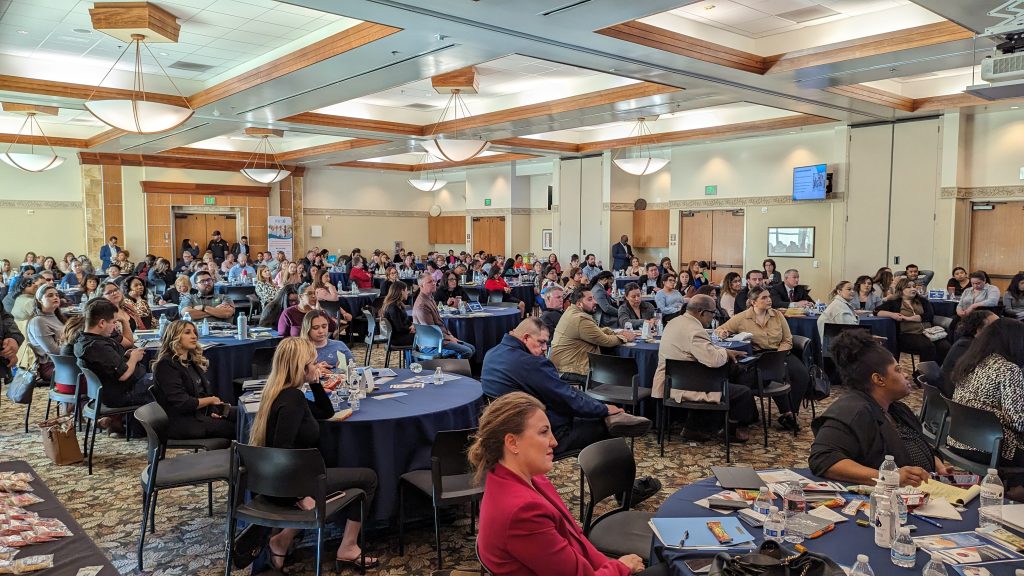
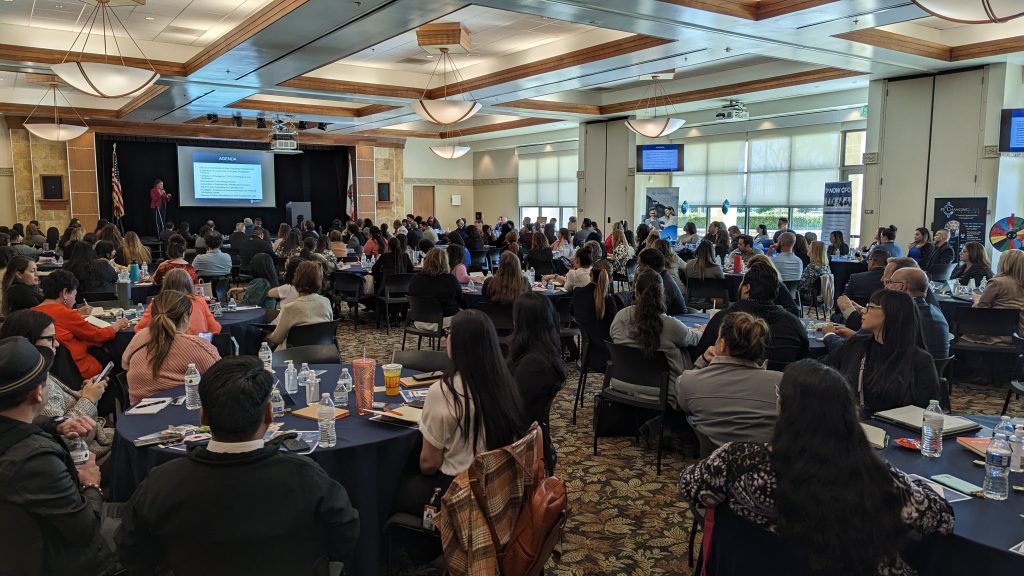
Brager & Moore offered several ideas for employee retention, including onboarding with on-the-job training and a 30- and 60-day check-in with the manager. They suggested employers consider mid-year performance reviews rather than just annual reviews. Town Hall meetings with the CEO were also recommended to enhance employee engagement.
Respecting employee privacy was another recurring theme. Speakers broadly advocated keeping interviews focused on the skills and responsibilities required for the job while avoiding questions that intrude into off-work activities. New California labor laws protect reproductive health decisions and off-the-job use of cannabis. Employers cannot ask for specifics about personal health issues when employees ask to take sick leave, but they can ask for a doctor’s note. Expanded bereavement leave limits what personal information employers can request.
Conference attendees were particularly interested in the rapidly evolving changes in coronavirus-related labor laws. “Cal/OSHA, not the California Department of Health, is your reference point for health & safety data,” said Thompson, who offered a roadmap to COVID compliance information starting at www.dir.ca.gov/dosh/coronavirus. “From there, visit your city, county and state health department websites, then go to the CDC,” she said, adding that California supplemental paid leave concluded on December 31, 2022.
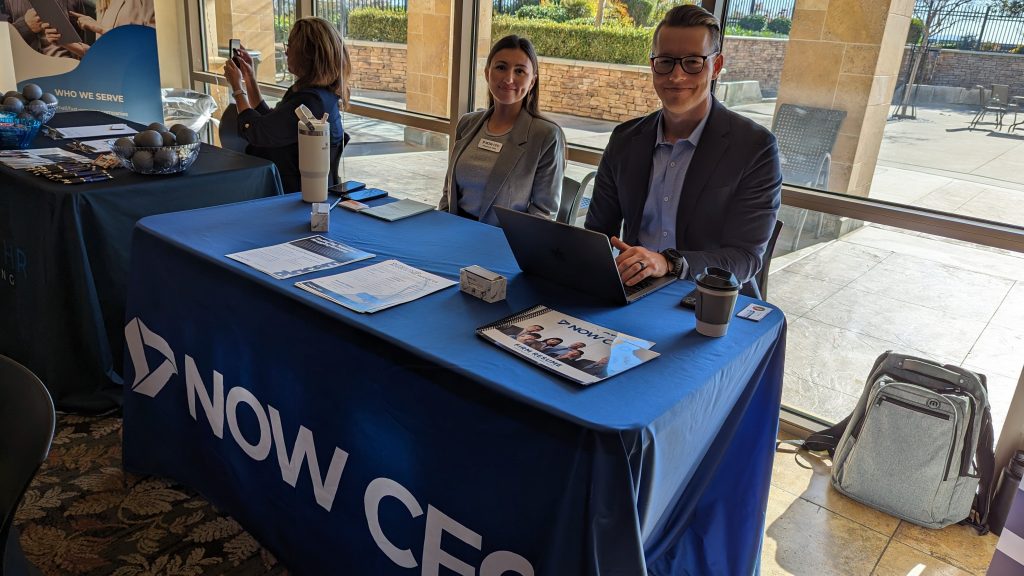
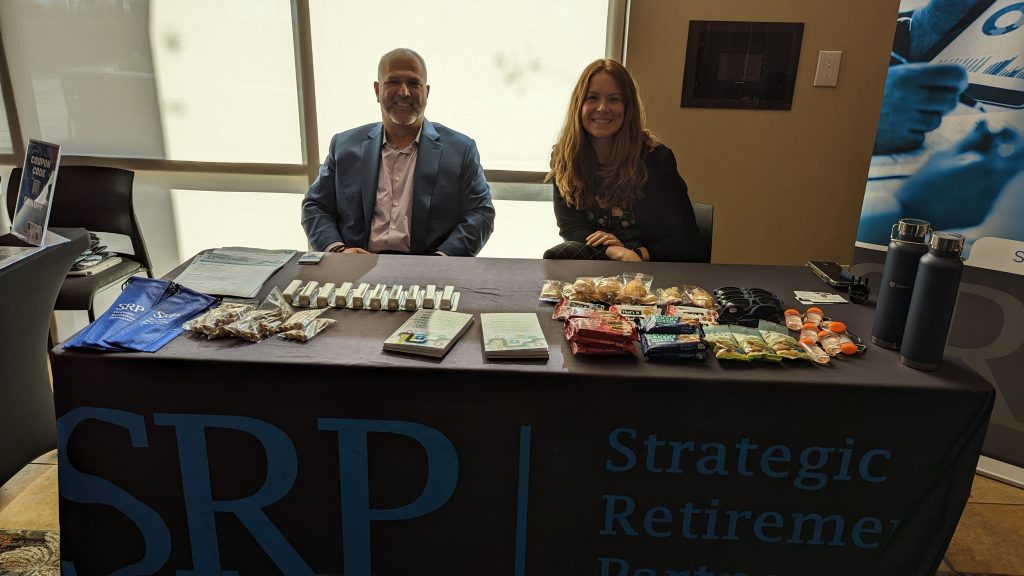
Copies of the PowerPoint slide decks are available to attendees by contacting the Inland Empire Regional Chamber of Commerce at info@iechamber.org. The 2023 Inland Empire Human Resources Conference was organized and produced by the Inland Empire Regional Chamber of Commerce and sponsored by San Bernardino County, Insight HR Consulting, Maniaci Insurance Services, Inc., Paycor, Vestwell, Now CFO, and Strategic Retirement Partners.

2023 Inland Empire Human Resources Conference
The 2023 Inland Empire Human Resources Conference promises to prepare businesses to be proactive against litigation, workplace disputes, risk mitigation, California labor law and regulatory compliance. The event will be held on Tuesday, February 7, from 1:30 to 6:30 p.m. at the Jessie Turner Community Center, 15556 Summit Avenue in Fontana.
“The conference will be beneficial for all employers, leaders, and HR Professionals who want to stay up to date on labor laws and learn about the best practices for retention and recruitment,” said Vilma Brager, COO of Insight HR Consulting. “Insight HR Consulting is partnering with the Inland Empire Regional Chamber of Commerce to provide the tools and resources business need to thrive.”
More than seven major employment law changes took effect just this year — including disclosing salary ranges, paid sick leave, sexual assault claims and more.
“Compliance with the constantly changing employment laws in California is essential. The state of California presumes that every employer, regardless of size is aware of new laws and is taking steps to implement changes where necessary,” said Allyson Thompson, Attorney and Partner at the law firm of Kaufman Dolowhich Voluck.
Key topics of discussion will include:
- 2023 Labor & Employment Law Update
- Employee Retention & Engagement
- California’s Pay Transparency Bill
Speakers Include:
- Vilma Brager, COO, Insight HR Consulting, LLC
- Edward Ornelas, President & CEO, Inland Empire Chamber of Commerce (IERCC)
- Allyson K. Thompson, Parnter, Attorney, Kaufman Dolowhich Voluck
- Alyson Boyd, Major Market Sales Executive, Paycor
- Brittany Huerta, Employee Benefits Consultant
- Vanessa Casillas, CEO, Changing Lives Staffing
- Juan P. Garcia, Principal, Blue Whale Compensation
Tickets are complimentary for members of the Inland Empire Regional Chamber of Commerce with pre-registration. Early bird registration for non-members is $10, and tickets will be $45 after early bird registration ends. Parking is free. To register, please visit the Inland Empire Regional Chamber of Commerce website at hr.iechamber.org.
The Inland Empire Regional Chamber of Commerce, San Bernardino County, Insight HR Consulting, Maniaci Insurance Services, Inc., Paycor, and Strategic Retirement Partners sponsor this event.
|
Business Journal Newsletter
|


-

 Travel & Tourism6 months ago
Ontario International Airport passenger volumes rose for 4th straight month in March while freight shipments grew by 15%
-

 Opinion6 months ago
KTGY Announces Unanimous Approval of Community-Serving Shopping Center in North Redlands, California
-

 Health & Wellness6 months ago
Dr. Anthony Hilliard Named President of Loma Linda University Health
-

 Commercial Real Estate Transactions6 months ago
Pollo Campero Ground Lease in Lake Elsinore Sets Near Four-Year Low Cap Rate Benchmark
-
 Bizz Buzz3 months ago
National CORE Ranked No. 2 Among Nation’s Top Nonprofit Affordable Housing Developers
-

 Commercial Real Estate Transactions6 months ago
Dedeaux Properties Signs Leading Electric Car Manufacturer to Long-Term Lease at 49,000-Square-Foot Facility in Perris, CA.