
Opinion
These are tech companies Americans want to work at most


Google is where Americans want to work the most in tech, receiving more than 487,000 searches a month Apple and Tesla take second and third, respectively
New research reveals that Google is the tech company Americans most want to work at.
The new study from document management company SmallPDF analyzed monthly searches for openings at the biggest tech companies in the US to see which brand was getting the most interest in job opportunities.
It found that Google comes out on top for searches, with ‘Google jobs’ receiving more than 339,000 searches a month on average in the US and the term ‘Google careers’ receiving more than 148,000 searches a month, adding up to a whopping total of 487,000 searches. This is more than 200,000 searches a month higher than second place.
Apple comes in second place on the list, thanks to 180,000 searches every month for ‘Apple jobs’ and 99,000 searches a month on average for ‘Apple careers’, adding up to 279,000 searches a month.
Coming in third place is a multinational automotive company, Tesla, with an average of 185,000 monthly searches for opportunities at the company. This is split down into 109,000 searches monthly for ‘Tesla jobs’ and 76,000 searches monthly for ‘Tesla careers.’
Facebook takes fourth place in the list, with 94,000 searches for ‘Facebook jobs’ and 49,000 searches a month for ‘Facebook careers’, which adds up to a total of 143,000 searches a month on average for Facebook work opportunities.
Rounding out the top five is Microsoft, which receives more than 141,000 searches a month for openings at the company. ‘Microsoft jobs’ receives 66,000 searches a month, and ‘Microsoft careers’ receives 75,000 searches a month on average.
|
|
Company |
“Jobs” searches |
“Careers” searches |
Total |
|
1 |
|
339,000 |
148,000 |
487,000 |
|
2 |
Apple |
180,000 |
99,000 |
279,000 |
|
3 |
Tesla |
109,000 |
76,000 |
185,000 |
|
4 |
|
94,000 |
49,000 |
143,000 |
|
5 |
Microsoft |
66,000 |
75,000 |
141,000 |
|
6 |
Salesforce |
52,000 |
41,000 |
93,000 |
|
7 |
Verizon |
45,000 |
41,000 |
86,000 |
|
8 |
Spectrum |
43,000 |
38,000 |
81,000 |
|
9 |
Netflix |
45,000 |
34,000 |
79,000 |
|
10 |
AT&T |
37,000 |
31,000 |
68,000 |
Commenting on the findings, a spokesperson from SmallPDF said: “While some of the US’s most well-known tech companies do indeed make their way into the top ten, many do not, indicating that the job searches for many people are varied and job seekers in the tech field are keeping their options open. The companies at the top of the list benefit from the prestige that their brand holds, which helps them attract the best talent, which helps them continue to lead the industry.”
The study was conducted by SmallPDF, which offers easy PDF conversion tools, allowing you to be more productive and work smarter with documents.
Source: smallpdf.com



By Niree Kodaverdian, Ph.D.
Inland Empire Business Journal | Commentary
The Santa Ana Regional Water Quality Control Board has been considering stricter requirements for managing stormwater runoff across San Bernardino, Riverside, and Orange Counties. Recently, I attended my third Water Board hearing on this issue and, once again, walked away disappointed. What should be a collaborative effort to improve the region’s water quality has instead felt adversarial, jeopardizing any opportunity to reach a balanced, effective outcome that best serves the region.
For some time, the affected jurisdictions have been concerned about the cost of changing these requirements. That’s where I came in. In 2024, Beacon Economics was commissioned to estimate the potential economic costs of the proposed MS4 Permit Tentative Order, which we concluded would total nearly $11 billion over 20 years in San Bernardino County alone. We worked with stormwater management and flood control personnel and with independent engineers to understand what compliance would require and developed estimates of potential capital and ongoing costs.
The proposed changes cover a lot, including industrial, commercial, and construction site inspections, trash capture and monitoring, and more. But the largest potential costs were associated with numeric limits, which establish thresholds for pollutants in stormwater runoff.
Historically, stormwater regulation has relied heavily on Best Management Practices (BMPs). These include filtration and treatment systems, trash-capture devices, green infrastructure, inspections, and other practices intended to prevent pollutants from entering stormwater.
Numeric limits vary because the numerical outcome itself becomes the standard. You can implement extensive and expensive BMPs and still not guarantee that every pollutant will remain below a particular threshold. Stormwater is affected by rainfall, geography, hydrology, development, infrastructure, and other factors cities and counties cannot completely control.
Based on our research and consultations with technical experts, we understood the proposed numeric limits to require compliance measures similar to those already undertaken by jurisdictions in Los Angeles through their Watershed Management Programs (WMPs) and Enhanced Watershed Management Programs (EWMPs). We looked at compliance plans and estimated costs in Los Angeles to understand what similar requirements could mean for permittees in the Santa Ana region, then compared those costs with each jurisdiction’s General Fund expenditures.
We updated the analysis in 2026, and the findings were very similar. It was against this backdrop that I attended my third Water Board hearing.
Representatives from affected jurisdictions have repeatedly shown up to explain why they believe aspects of the proposed requirements are unreasonable and unrealistic. Engineers and stormwater management professionals tried to explain the practical constraints. Yet once again, it felt like the affected jurisdictions and Regional Board staff were on opposing sides of an issue where the end goal is the same.
We all want cleaner water. The question is how to get there.
If we impose numeric limits that are extraordinarily difficult, or impossible, to achieve, we don’t automatically get cleaner water. We may instead create enormous costs for local governments and their residents. Our analysis estimates billions of dollars in potential compliance costs over 20 years across the county. And after spending all that money, jurisdictions could still fail to meet the numeric limits and potentially face penalties.
And those costs can’t be ignored simply because residents don’t receive a bill labeled “stormwater compliance.” Cities and counties have limited resources. Money spent meeting one requirement isn’t spent on other local needs. Policymaking always involves tradeoffs—that’s one of the most basic lessons in economics.
After three hearings, it feels like an “us versus them” debate. It shouldn’t be. We should be able to question the proposed approach without questioning the goal—and focus on what actually matters: finding the most effective and realistic way to improve water quality.
Niree Kodaverdian, Ph.D., is a Research Manager at Beacon Economics LLC. Learn more at www.BeaconEcon.com.
Opinion
KTGY Announces Unanimous Approval of Community-Serving Shopping Center in North Redlands, California
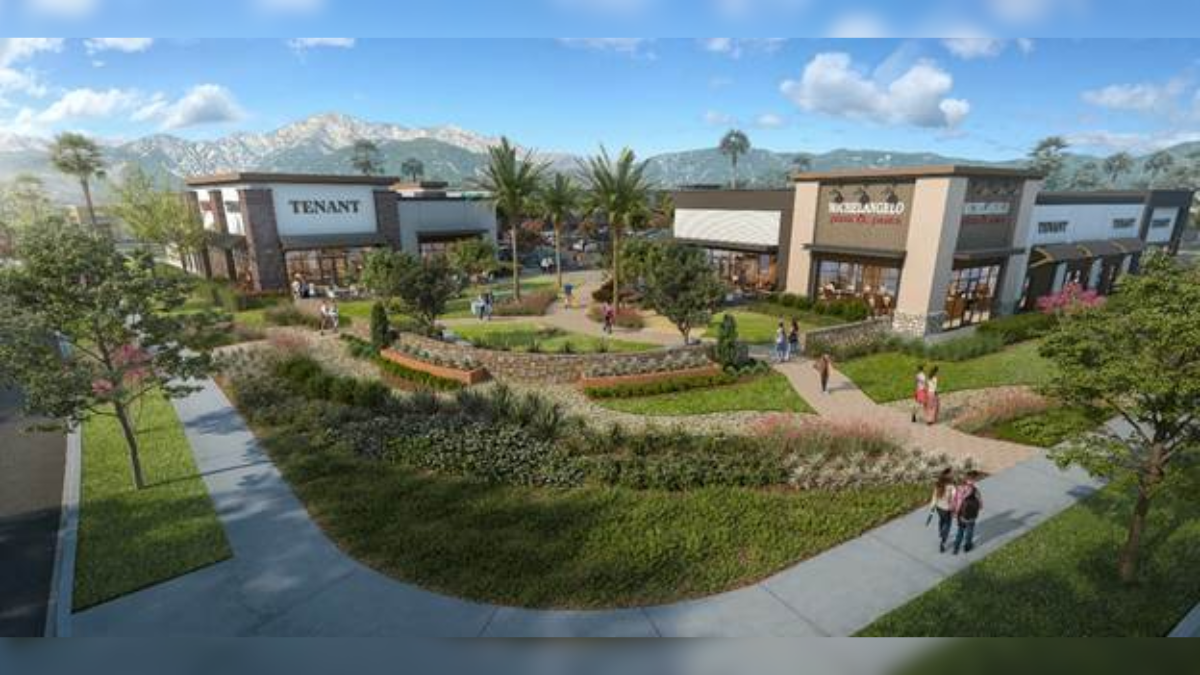
KTGY’s design transforms an underutilized site into a neighborhood anchor and showcases Regency Centers’ commitment to the growing residential community
KTGY, an award-winning design firm focused on architecture, interior design, branded environments and urban design, announces that The Marketplace, a Whole Foods-anchored retail development designed for Regency Centers, received unanimous approval from the Redlands City Council on Feb. 17, 2026, clearing the way for the development to move forward to building permits and construction. Planned on an 8.18-acre vacant site at the northeast corner of Lugonia Avenue and Tennessee Street, the center sits in the heart of one of North Redlands’ fastest-growing residential areas.
The Marketplace is planned as a 71,400-square-foot neighborhood retail center anchored by Whole Foods and supported by four shop buildings and a dedicated drive-through pad. Designed to LEED Silver standards, the development reflects Regency Centers’ approach to placemaking, emphasizing retail environments that are authentic to their neighborhoods and foster long-term community connection. KTGY’s design reinforces and complements this vision through context-responsive architecture and a site plan shaped around community needs. The development transforms a long-underutilized site into a neighborhood anchor positioned to serve existing residents and new housing planned to the north and east.
“Working with KTGY and Whole Foods Market on The Marketplace has been a genuinely rewarding process,” said Ray Kayacan, vice president of investments at Regency Centers. “Redlands is a community that’s growing fast, and we’ve been intentional about making sure this development grows with it. Getting unanimous approval from the City Council speaks to the alignment we built with the city early on, and I think it reflects how well the full team executed against a shared vision.”
KTGY’s design team approached the site with the task of balancing client goals, tenant requirements and the needs of a future community while maximizing retail density and flexibility. The site’s proximity to the 210 freeway and its high parking requirements demanded a precise and efficient layout. KTGY allocated the required parking and EV stalls, utilized compact stall allowances and directed truck circulation around the site perimeter. The result is a finely tuned example of suburban retail that serves nearby neighborhoods, attracts customers off the freeway and creates a strong leasing environment for tenants.
The Marketplace is anchored by a 36,000-square-foot Whole Foods and organized around four retail buildings that can be flexibly divided into as many as 18 storefronts. A fifth pad building is planned for a drive-through use with its own dedicated circulation. Early concepts explored a more industrial character, but to secure the grocery anchor, KTGY adapted the development’s aesthetics to align with Whole Foods’ contemporary brand requirements.
The final design features simple, contemporary building forms emphasized by brick columns and tower elements, with a connective brick treatment carried across the center. Roofline and material variations add visual interest, while industrial accents, including gooseneck lamps and standing seam metal awnings, reference the area’s historic context. The architecture incorporates cementitious siding, stone treatments at key corners and parapet-screened rooftop equipment, creating an earthy, warm palette that responds to the surrounding neighborhood.
“Redlands has a real sense of place, and that shaped how we thought about this project from the start,” said Kayacan. “With one major housing development underway and another planned nearby, this site had an obvious gap to fill. Residents are going to have a Whole Foods, flexible retail that can support a range of needs, and a place to gather.”
KTGY also shifted back-of-house functions and truck circulation away from the main parking field, raised the sidewalk and added a landscaped berm to buffer pedestrians from drive-through and freeway activity. A lighter entrance structure at the Whole Foods façade breaks up the flat roofline and creates space for outdoor seating, and the development is rounded out by landscaped buffers and a shaded corner plaza where neighbors can gather.
Buildings are arranged around the perimeter with parking in the center, creating a clear and efficient circulation pattern. The site includes five access points: two primary driveways from Lugonia Avenue and Tennessee Street, secondary entries from both streets and a connection to the Tennessee Village development to the north. The drive-through pad includes its own pocket of parking to support tenant operations.
Two major housing developments — Lugonia Village, with 541 homes, and Tennessee Village, with 460 apartments and commercial space — were approved nearby in 2024, reinforcing the need for neighborhood-serving retail in this corridor.
“Our team approached this site with a focus on maximizing retail density and creating flexible space that can support a range of tenants while meeting the needs of the city, Regency Centers and both existing and future residents,” said Brandon Wernli, associate principal at KTGY. “Balancing a tight site, high parking requirements and a late-stage design shift to meet Whole Foods’ brand standards required precision. The result is a contemporary retail environment that reflects Regency Centers’ commitment to creating neighborhood-serving places that connect with surrounding communities.”
“This development fills a meaningful gap in the built environment,” Wernli said. “With new housing planned nearby, The Marketplace will serve as a neighborhood anchor and a convenient place to shop, dine and gather. It’s a strong example of how thoughtful design can elevate everyday community experiences.”
Construction is expected to begin in late 2026, with completion anticipated in 2028.
Opinion
Ontario International Airport Welcomes Avelo Airlines with New Nonstop Service to Sonoma County

Expansion Connects Southern California Travelers to Northern California’s Premier Wine Destination
Ontario International Airport (ONT) continues its impressive growth trajectory with the recent announcement from Avelo Airlines about their exclusive nonstop service to Sonoma County and Northern California’s renowned wine country. Starting October 10, the service will operate twice weekly on Thursdays and Sundays, connecting travelers directly to the Charles M. Schulz Sonoma County Airport (STS).
Streamlined Travel Experience
Passengers choosing Ontario International Airport are set to benefit immensely, not just from the expanded destination choices but also from the significant time savings associated with flying out of ONT. Known for its convenience and efficiency, ONT offers a more relaxed and hassle-free travel experience compared to larger, more congested airports. The smaller scale and thoughtful layout of ONT allow passengers to navigate check-ins, security, and boarding processes much more quickly, reducing the stress often associated with air travel.
Local Impact and Convenience
“Atif Elkadi, Chief Executive Officer of the Ontario International Airport Authority, highlighted the benefits of the new service, stating, “We are thrilled to add Avelo Airlines to our family of air carriers as we continue to provide exciting new destinations and travel options for the millions of Southern Californians who have made ONT their airport of choice.”
ONT’s strategic location and accessibility play a crucial role in its popularity. Situated in the heart of Southern California’s Inland Empire, the airport is conveniently reachable for residents from San Bernardino to Riverside and the surrounding suburbs. The airport’s proximity to major freeways reduces travel time to the airport itself, which is a significant advantage for local residents and businesses.
Enhanced Access to Northern California
Andrew Levy, Founder and CEO of Avelo Airlines, expressed enthusiasm about the new route, saying, “We are thrilled to announce our new nonstop service from Ontario to the Bay Area/Sonoma County, offering travelers a convenient, reliable, and affordable way to one of the most beautiful and vibrant regions in Northern California.”
Jon Stout, STS Airport Manager, also noted the mutual benefits of the new connection, “It’s fantastic to see Avelo connect Sonoma County with Ontario. This new route will bring a new level of convenience for our local residents and our neighbors in the Inland Empire.”
ONT’s continued expansion and the addition of new routes like the one to Sonoma County reflect its role as a pivotal hub in the region. With the airport on track to exceed 7 million passengers this year and recent records showing more than 650,000 passengers in June alone, ONT is setting new benchmarks in serving the community.
A Gateway to Growth
With world-class facilities and a commitment to excellent customer service, Ontario International Airport is rapidly becoming the gateway of choice for travelers seeking both domestic and international connections. Elkadi proudly asserts, “With our world-class facilities, great amenities, and unparalleled customer experiences, we are proud to connect the world to one of the most dynamic population and economic centers in the country.”
As ONT continues to expand its services and streamline travel experiences, it solidifies its position not just as a transport hub but as a significant contributor to the economic vitality of the Inland Empire.
|
Business Journal Newsletter
|


-
 Bizz Buzz4 months ago
National CORE Ranked No. 2 Among Nation’s Top Nonprofit Affordable Housing Developers
-

 Business5 months ago
GreenRock Capital and J.P. Morgan Close $103 Million Tax-Exempt Financing for Ontario Hotel and Conference Center
-
Community4 months ago
National CORE Applauds Federal Legislation to Preserve Aging Affordable Housing
-

 Legal3 months ago
How a Landmark Healthcare Antitrust Case Could Affect Inland Empire Providers, Employers, and Patients
-

 Food & Lifestyle2 weeks ago
Fleming’s Prime Steakhouse to Open First Riverside Location in November
-

 Opinion2 days ago
Cleaner Water Requires Collaboration, Not Confrontation