
Commercial Real Estate
Local Land Use Decisions, NIMBYism Are Leading Causes Behind Southern California’s Lack of Housing Production Across Price Levels




Commercial Real Estate Transactions
Pollo Campero Ground Lease in Lake Elsinore Sets Near Four-Year Low Cap Rate Benchmark
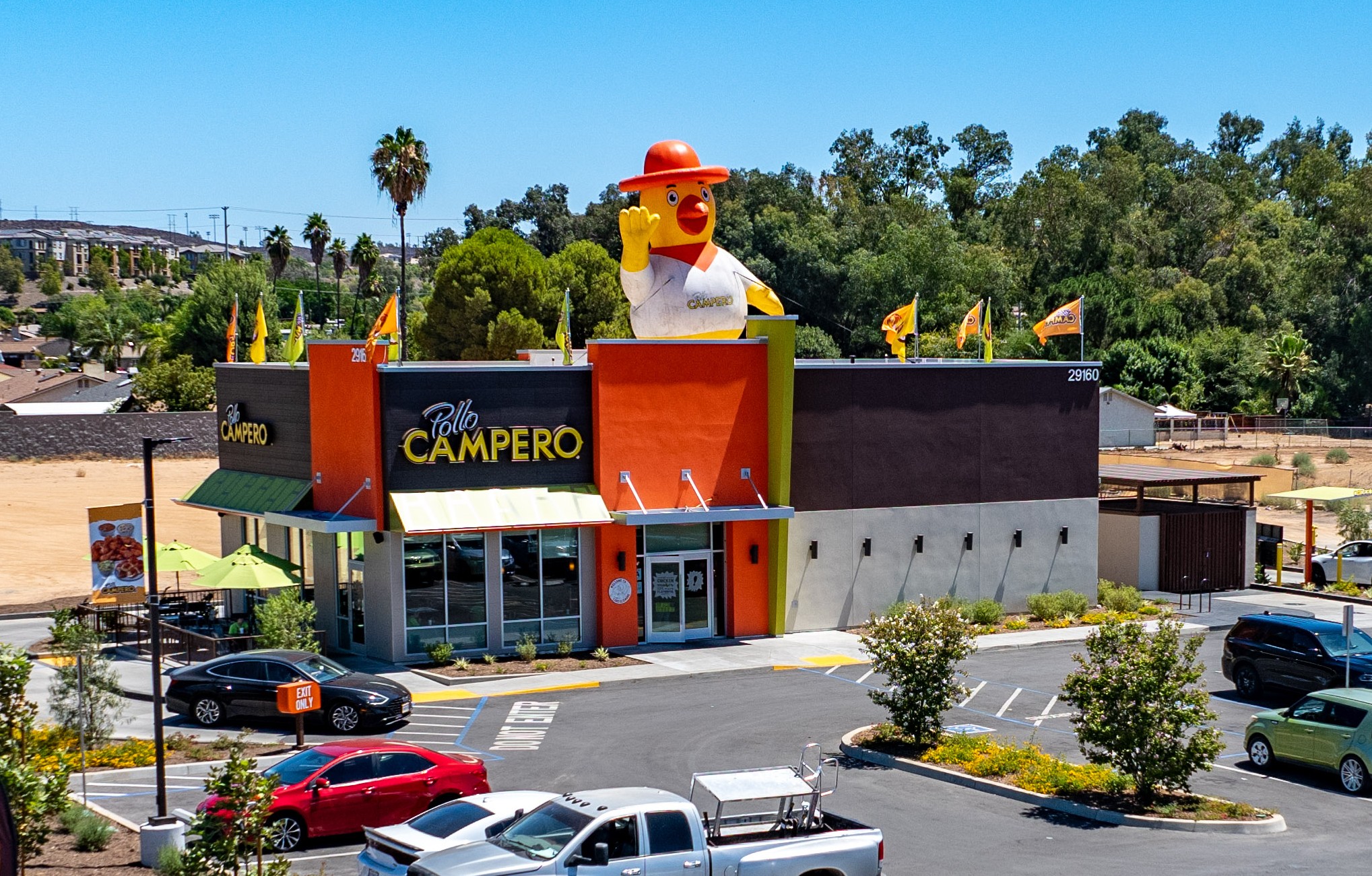
Hanley Investment Group arranges $2.9M sale as investor demand surges for new-construction triple-net retail assets
Hanley Investment Group Real Estate Advisors, a nationally recognized real estate brokerage and advisory firm specializing in retail property sales, announced today that the firm has arranged the sale of a newly constructed, single-tenant Pollo Campero ground lease in Lake Elsinore, California, for $2,925,000. The closing cap rate represents the lowest Pollo Campero cap rate recorded nationwide in nearly four years.
Hanley Investment Group’s Executive Vice President Bill Asher and Executive Vice President and Partner Jeff Lefko represented the seller and developer, Evergreen Devco, a leader in retail, multifamily and industrial real estate development.
The buyer, a private investor based in San Bernardino County, California, was represented by Greg Bedell and Lance Mordachini of Progressive Real Estate Partners.
“We generated multiple qualified offers and procured an all-cash 1031 exchange buyer through an existing broker relationship,” said Asher. “The property sold prior to the anchor tenant, Stater Bros., commencing construction and opening for business, which underscores the strength of the location and tenant.”
“This transaction was a great example of how strong relationships can create real execution certainty,” said Greg Bedell, senior vice president and managing director at Progressive Real Estate Partners. “Our prior experience working with both Evergreen Devco and Hanley Investment Group gave our client a high level of confidence early in the process, which allowed us to move quickly and decisively. The combination of a high‑quality development, a growing trade area and a long‑term absolute triple‑net ground lease made this a compelling acquisition for our client.”
The newly constructed 3,000‑square‑foot building sits on 1.10 acres and features a 15‑year absolute triple‑net corporate ground lease with 10% rental increases every five years during the primary term and each of the option periods. The lease includes minimal landlord responsibilities.
The property is located at 29160 Central Avenue (Highway 74) in Lake Elsinore at the signalized intersection of Central Avenue and Cambern Avenue. It is a pad to a new Stater Bros.-anchored retail development positioned within the trade area’s dominant regional retail corridor, which sees 13 million combined annual visits (according to Placer.ai). Stater Bros. is expected to open between the fourth quarter of 2026 and the first quarter of 2027. Other co-tenants include 7‑Eleven (now open), Dutch Bros Coffee (projected to open in the fourth quarter of 2026) and Super Star Car Wash (scheduled to open in April 2026).
The property benefits from excellent visibility along Highway 74/Central Avenue (28,000 cars per day) and immediate access to Interstate 15 (127,000 cars per day). The surrounding trade area includes Costco, Lowe’s, Target, Walmart Supercenter, The Home Depot, Aldi, LA Fitness, PetSmart and other national retailers.
“This corridor continues to attract best-in-class retailers due to strong population growth, high traffic counts and outstanding regional draw at the intersection,” said Asher. “The expansion of this new Stater Bros. location is a testament to the chain’s tremendous historical success in other areas within the city of Lake Elsinore, one of the fastest-growing areas in California.”
Hanley Investment Group is currently marketing the Super Star Car Wash outparcel for sale, offering investors an opportunity to acquire another new‑construction, long‑term, absolute triple-net ground lease with minimal landlord responsibilities within the same development.
“Investor demand for new‑construction, absolute triple-net ground leases with long‑term corporate guarantees remains exceptionally strong,” Asher added. “This sale reflects the continued appetite for high‑quality, service‑oriented retail in growing Southern California markets.”
Commercial Real Estate Transactions
Dedeaux Properties Signs Leading Electric Car Manufacturer to Long-Term Lease at 49,000-Square-Foot Facility in Perris, CA.
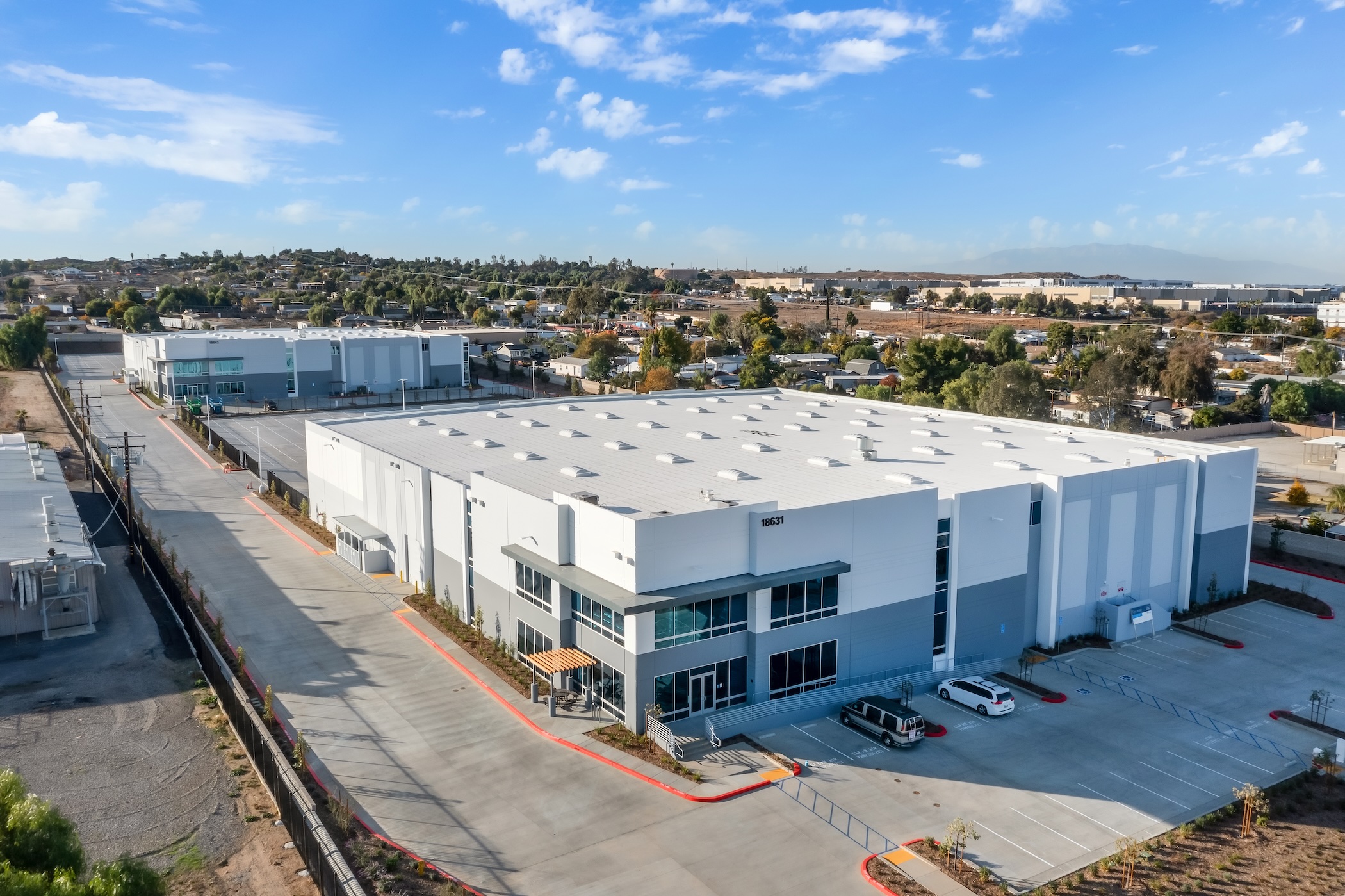
Rivian to utilize Perris facility for EV sales, service, and charging operations as demand for industrial space rebounds in the Inland Empire
Dedeaux Properties has signed Rivian, a leading electric car manufacturer to a long-term lease for an entire 49,470-square-foot light-manufacturing facility in Perris, CA. The space will be used by the company for sales, maintenance, service, charging, and repair of their line of electric vehicles.
The 4.6-acre property is part of a logistics campus developed by Dedeaux consisting of two identical state-of-the-art buildings each with 30-foot clear heights, ESFR sprinklers, 1,200 amps, 16 dock high loading doors, and a large yard that features 34 auto stalls and 55 trailer stalls. The other building is fully occupied by Ryder Logistics. This low coverage industrial site collectively offers over 300,000 square feet of functional IOS for trailer parking and outdoor storage.
Its location at 18631 Seaton Ave provides immediate access/egress to Interstate 215, one of Southern California’s major north/south thoroughfares, allowing tenants to serve throughout the region.
Demand in the East Inland Empire has surged in the last quarter after experiencing multiple years of record low activity. According to Colliers who represented Dedeaux in transaction, Q4 2025 gross activity in the Eastern Inland Empire surpassed 6M square feet for the first time since Q3 2022.
“With demand returning and a high amount of product available in the market, tenants are going to seek out the best properties to meet their needs,” said Ben Horning, Director of Development at Dedeaux Properties. “Our approach was to deliver a thoughtfully designed, best-in-class asset – one we believed would resonate with a tenant like Rivian.
Members of the Colliers team included Mark Zorn, Cory Whitman, and Nico Coppola.
Commercial Real Estate Transactions
Hanley Investment Group Arranges Sales of Two New Starbucks Properties in Pomona and San Bernardino, Calif., Totaling $8.14 Million
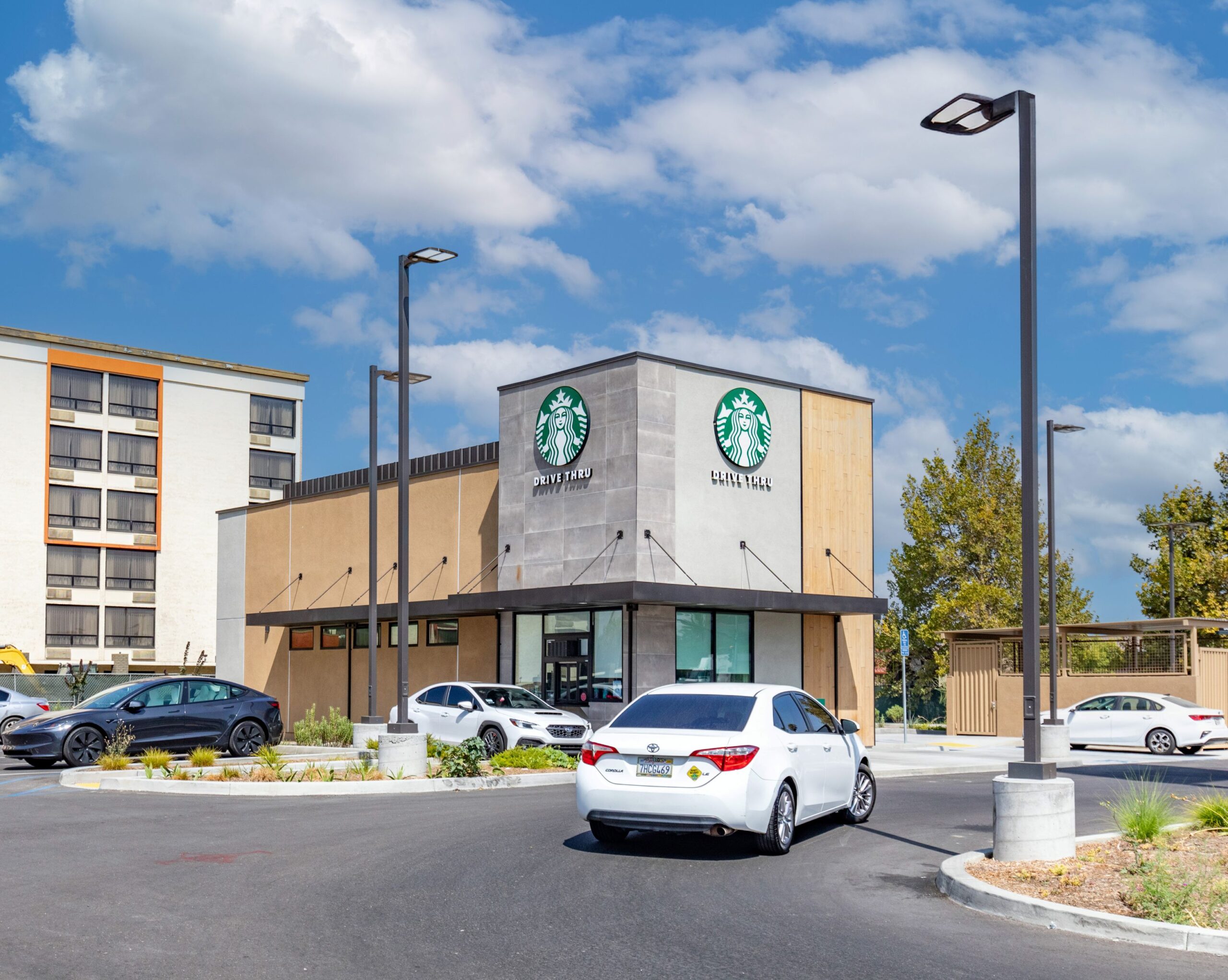
New 15‑year corporate leases, and high‑traffic locations drive two separate Starbucks transactions in Southern California
Hanley Investment Group Real Estate Advisors, a national real estate brokerage and advisory firm specializing in retail property sales, announced today the sale of two new single‑tenant Starbucks properties in Pomona and San Bernardino, California. The combined sales price was $8,139,000.
Hanley Investment Group’s Executive Vice President Bill Asher and Executive Vice President and Partner Jeff Lefko represented both sellers.
Starbucks — Pomona, California
The newly renovated, single‑tenant Starbucks café and drive‑thru located at 2302 North Garey Avenue in Pomona sold for $4,575,000. The buyer, a private investor based in Los Angeles completing a 1031 exchange, was represented by Brad Freeman of Freeman & Associates. Asher and Lefko represented the seller, LA Icon LLC of Los Angeles.
“We procured a repeat Southern California‑based 1031 exchange buyer through a broker relationship, both of whom we have successfully transacted with on multiple occasions,” Asher said. “We secured the buyer within days of closing their downleg, allowing them to confidently identify an upleg and close escrow early in their 1031 exchange period.”
The 1,650‑square‑foot building, originally constructed in 1977, was converted from an independent fast‑food restaurant and fully renovated in 2024 to Starbucks’ newest prototype. The property sits on a 0.38‑acre parcel at the hard‑corner, signalized intersection of Arrow Highway and Garey Avenue, which sees more than 38,000 cars per day.
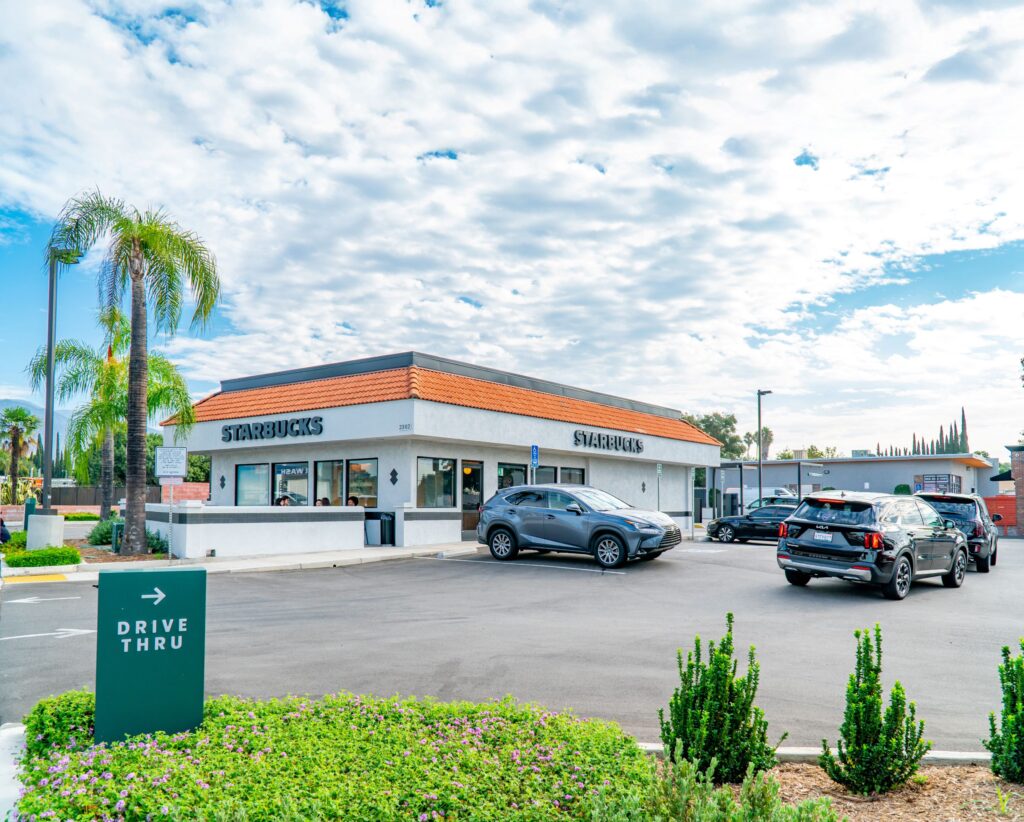
The location benefits from dense, infill Los Angeles County demographics and proximity to major regional demand drivers, including The Claremont Colleges, the University of La Verne, the LA County Fairplex and Pomona Valley Hospital Medical Center. The property is also 200 feet from the Pomona Gold Line Metro Station and near new multifamily development.
The newly renovated Starbucks features a corporate 15-year triple-net lease with 10% rental increasesevery five years during the primary term and each of the three five-year options.
“This is a rare 15-year primary lease term with no early termination right, signaling strong long-term commitment to the site,” Asher said. “The buyer also benefitted from a lease structure that Starbucks was responsible for maintaining the property including the roof, a unique characteristic for a fee-simple Starbucks investment in California in today’s market.”
Starbucks — San Bernardino, California
The new‑construction, single‑tenant Starbucks drive‑thru‑only prototype located at 291 East Hospitality Lane in San Bernardino sold for $3,564,000. The buyer, a local investor from Orange County, California, was represented by David Kluver, senior vice president and principal with Lee & Associates in Newport Beach, California. Asher and Lefko represented the seller, a local developer.
“We procured a repeat Starbucks investor based in Southern California through a broker relationship and closed escrow on a rare Starbucks drive‑thru‑only prototype in the Inland Empire,” Asher said. “The combination of a new 15‑year lease, a prime freeway‑adjacent location and strong co‑tenancy resulted in premium pricing for this asset.”
Completed in 2025, the 1,200‑square‑foot building sits on a 0.58‑acre parcel and features a double drive‑thru designed to maximize operational efficiency and throughput, ideal for this very accessible and visible freeway location. The property is secured by a 15‑year corporate triple‑net lease, with no early cancellation clause and 10% rental increases every five years during the primary term and each of the four five‑year options.
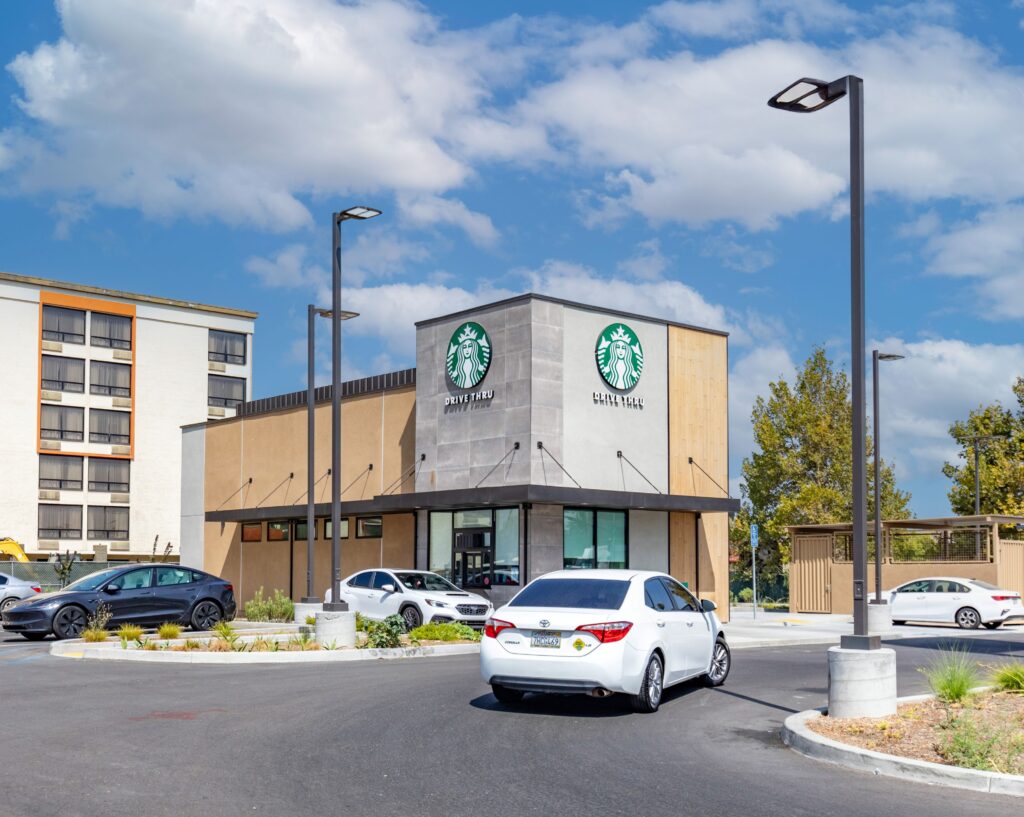
The site benefits from a strategic, freeway‑adjacent location just off the Interstate 10 Freeway (210,600 cars per day) and the signalized intersection of Hospitality Lane and Waterman Avenue (55,000 cars per day). It is co‑tenanted with a new Quick Quack Car Wash, which Hanley Investment Group recently sold, and is positioned adjacent to the Tri‑City Corporate Centre, a 153‑acre, 1.69‑million‑square‑foot master‑planned office, retail and hospitality district.
The surrounding area includes several major hotels, providing consistent daily traffic and strong synergy for the tenant. The Inland Empire continues to experience significant population and economic growth, with more than 257,000 residents within five miles and a daytime population of 142,440 within three miles.
Starbucks (NASDAQ: SBUX), rated BBB+ by S&P, has been named one of Fortune’s “World’s Most Admired Companies” from 2009 to 2025 and operates more than 40,000 stores in 84 countries.
“Demand for single‑tenant, service‑oriented assets leased to nationally recognized operators like Starbucks remains exceptionally strong,” Asher said. “The combination of corporate credit, long‑term lease security and high‑traffic Inland Empire and Los Angeles County locations continues to resonate with private and 1031 exchange buyers.”
To date, Hanley Investment Group has arranged the sale of more than $760 million in Starbucks‑leased investments nationwide, including 75 Starbucks‑occupied properties in California.
|
Business Journal Newsletter
|


-
 Sports Business6 months ago
Ontario Tower Buzzers and IE Chamber to Host Exclusive VIP Reception at New ONT Field
-
 Travel & Tourism5 months ago
Ontario International Airport passenger volumes rose for 4th straight month in March while freight shipments grew by 15%
-

 People On The Move6 months ago
Kaiser Permanente Appoints New Senior Vice President and Area Manager for San Bernardino County
-

 Career & Workplace6 months ago
Jobs Dip, But Not Demand: Inland Empire Economy Shows Mixed Start to 2026
-
 Opinion5 months ago
KTGY Announces Unanimous Approval of Community-Serving Shopping Center in North Redlands, California
-
 Health & Wellness5 months ago
Dr. Anthony Hilliard Named President of Loma Linda University Health