
Business
Tips on Accessing Capital as an Under-resourced Small Business Owner


Interview with Peter E. Jackson, MBA, Vice President, Sr. Business Consultant at J.P. Morgan Chase
By Josaline Cuesta, California Program Director, Small Business Majority
Entrepreneurship is essential to a thriving and equitable economy. Yet, too many of our smallest businesses—especially those owned by people of color, women, rural business owners, and other under-resourced communities—face significant hurdles in accessing capital from banks and other traditional financial institutions.
Small Business Majority prides itself on partnering with experts in the field to mitigate the unnecessary impacts of inequitable access to capital and help to break down systematic barriers.
Peter E. Jackson, MBA is Vice President, Sr. Business Consultant at J.P. Morgan Chase. His work in California has been integral to creating pathways for minority and women entrepreneurs to access capital successfully. I sat down with Peter for a Q&A to discuss his experiences, share his expertise and tips, and learn more about expanded opportunities for capital in a unique community.
Do you believe there is a barrier to accessing responsible capital for small business owners? If yes, do you believe that a certain group of small business owners are more susceptible to experiencing challenges? Why?
From where I sit, one of the biggest hurdles facing minority small businesses is access to financial education. Many Black and Latino business owners we work with through the Chase mentorship program, believe it or not, cite access to education as their top need, e.g., understanding working capital, credit readiness, financial planning, managing debt and cash flow, etc. Working knowledge of these principles is the foundation of building a small business. That means having your bookkeeping and financial operations to help you make your best case when seeking funding/capital from any lender. Not having this in order may delay any financing for your business. There are also questions to ask yourself, e.g. ‘Am I in a healthy financial position to pay back a loan or is a bank loan the right financing option for my business needs at this time?’ This is where a banking relationship or banker can come in handy.
Often, minority entrepreneurs may not have had the best relationship with a bank or may not have had a parent or close individual to seek guidance from related to entrepreneurship – the list goes on. The pandemic exacerbated many of the underlying racial disparities that already existed in the U.S., including the banking system. As a firm, we recognize these challenges and do everything we can to address them.
In 2020, JPMorgan Chase announced a $30 billion racial equity commitment to create an inclusive economic recovery and help Black and Latino small businesses, families, and local communities create and sustain generational wealth. We’re creating the infrastructure to help more minority-owned businesses grow and recover through new programs, products, and hiring. This service is free, and business owners do not have to be Chase customers to receive coaching and mentorship.
Information about the JP Morgan Chase Minority Owned – Business Program is available at: https://www.chase.com/es/business/minority-businesses
What stories have you heard about the ease of accessing capital for small business owners? Can you please share a few typical challenges and some success stories? Did any success stories involve innovation? Did owners have to think outside the box to gain continued access to capital?
Yes, thinking out of the box is an everyday part of what we as Sr. Business Consultants do. Every business owner comes from a different place financially and operates their business differently. An example of this was a local smoothie bar owned by a Latina entrepreneur in Fontana, California. I discussed her goals and challenges, and she needed to obtain a small working capital loan to hire a part-time employee to extend her business hours and add signage. I helped her calculate and understand her break-even to determine the right price she needed to charge for her product to be able to pay for an additional employee and add a sign to the front of her store. This was important because she established new sales goals to drive more revenue. Also, the loan underwriter could see her business now had sufficient income capacity to borrow and pay back a loan by charging enough to support the loan payment. Business owners often borrow without a plan to demonstrate they can repay the loan or without consulting their CPA to ensure they leave enough money in their business to borrow. Part of my role is to help small business owners understand their business finances and how to leverage them to scale and grow their businesses.
What are some ways to increase small business funding to expand access to capital?
From JPMorgan Chase’s standpoint, here’s what we are doing to expand access to capital for underrepresented communities. We have committed $396 million (page 23-25) in small business philanthropy to grow Black, Hispanic and women-owned small businesses and create a more inclusive recovery from the COVID-19 pandemic, including:
- ~$42.5 million to expand the Entrepreneurs of Color Fund (EOCF) in more U.S. cities, the program will offer low-cost loans and technical assistance to small businesses through LISC and CFDI network
- Philanthropic investments to build the capacity of diverse-led nonprofits across the globe and support the signature Ascend Program
- Policy solutions through the JPMorgan Chase Policy Center to improve U.S. Small Business Administration (SBA) program to better meet the needs of minority- and women-owned small businesses.
Within Business Banking, we plan to provide an additional 15,000 loans -totaling $2 billion- to small businesses in majority-Black, -Hispanic and Latino communities over the next five years. To further expand access to credit to minority business owners, we’re:
- Exploring targeted adjustments to how the firm evaluates credit applications
- Introducing new products, including a digital lending platform, to better support the needs of small Black, Hispanic and Latino-owned businesses seeking quick access to capital.
What are some of your recommended, trusted community resources or training opportunities within the Inland Empire that will help with understanding ways to access legitimate capital?
- Mentorship, dedicated coaching, and education are critical to helping people get credit ready. Look into Chase’s 1:1 coaching for minority entrepreneurs across 21 U.S. cities, where they work with a senior business consultant to help them scale. Visit www.chase.com/businessconsultant to learn more.
- Visit the Inland Empire Center for Entrepreneurship (IECE), an SBDC program within California State University, San Bernardino, which delivers a wide range of programs, technical assistance, and services to existing small business owners or aspiring entrepreneurs in the community. Every state has a small business development center offered through U.S. SBA and colleges/universities.
- Lastly, I think AmPac, UCR, and the University of La Verne also have some of the strongest community resources that speak to access to capital, readiness, training, grant programs, microfinancing, etc.
Peter will join other financial experts for a Small Business Majority hosted event on September 14, 5:30pm PT. “Breaking Barriers: Accessing capital as women business owners of color” is a free event to learn tips for remaining resilient in business and how to navigate non-predatory debt financing options that will help grow or strengthen your woman-owned small business to help build generational wealth.
Register for this event here: https://www.eventbrite.com/e/breaking-barriers-accessing-capital-as-women-business-owners-of-color-registration-393175316957









Business
Unisource Solutions Grows Its Inland Empire Presence with the Addition of TOTALPLAN Business Interiors


Southern California’s leading workplace design and furnishings resource deepens its regional presence by uniting with a 57-year Inland Empire institution.
Unisource Solutions, California’s Haworth Best in Class dealership and a comprehensive workplace design resource, has announced the acquisition of TOTALPLAN a fixture of the Inland Empire business community since 1969. The strategic partnership brings together two organizations with a combined heritage of more than 80 years of expertise, unifying their complementary strengths to better serve businesses, architects, and interior designers across the Inland Empire.
Founded in 1987, Unisource Solutions has built its reputation as far more than a furniture dealer. The company operates as a full-service design resource — offering space planning, workplace strategy and analytics, installation services, project management, and custom furnishings through its in-house brand, Platform by Unisource Solutions. With access to more than 300 manufacturers, Unisource serves clients across corporate, healthcare, higher education, and financial sectors.

TOTALPLAN has spent more than five decades cultivating trusted relationships with businesses of all sizes throughout the Inland. Under the leadership of owner Denny Fosdick, TOTALPLAN earned a reputation for quality service, community investment, and a deep understanding of the regional market.
“For over 57 years, TOTALPLAN has been dedicated to providing exceptional workspace solutions throughout the Inland Empire and beyond. Now, we’re excited to join forces with Unisource Solutions. This partnership brings together our deep community roots with Unisource’s extensive resources and capabilities. I’m proud to pass the torch to a fellow Inland Empire resident who understands this community and will carry on the legacy we’ve built here.” —Denny Fosdick, Owner, TOTALPLAN Business Interiors
Jamal Nasserdeen, President of Unisource Solutions, who grew up in the Inland Empire, expressed the personal significance of the acquisition and its implications for Unisource’s long-term growth strategy in the region.
“Growing up and living in the Inland Empire, it’s a true honor to build on the tremendous 57-year legacy that Denny and his team have established. This partnership marks a pivotal moment in our growth journey, significantly expanding our capabilities throughout the region and strengthening our position as Southern California’s premier workplace solutions provider. It’s a privilege to bring TOTALPLAN into the Unisource Solutions family.” — Jamal Nasserdeen, President, Unisource Solutions
The partnership also carries the endorsement of Haworth, the globally recognized furniture manufacturer for which Unisource holds its Best-in-Class dealer designation. Tom Peyton, Haworth’s Regional Vice President for the West Region, noted that the partnership reinforces the strength of Unisource’s regional coverage and honors the trusted relationships TOTALPLAN has spent decades building.
The combined organization now brings a unified offering across workplace design, multi brand furniture sourcing, custom fabrication through Platform by Unisource Solutions, and comprehensive facilities services including delivery, installation, reconfiguration, and relocation support. Clients across architecture, interior design, and corporate facilities teams will benefit from a single, deeply resourced partner capable of supporting projects from initial concept through move-in.
For businesses in the Inland Empire seeking to transform their workspaces, the new partnership signals expanded local access to a nationally capable team, one that is deeply invested in the communities it serves.

A children’s museum and indoor play area that lets imaginations wander open soon to local community
Play Street Museum, an interactive children’s museum and indoor play area purposefully designed to encourage a young child’s sense of independence, exploration, and creativity, will be opening its newest franchise location in the coming weeks in Ontario, California. Locally owned by Teresa and Sergio Carreras, the coming location marks a key milestone in an expanding franchise program, with its first location in California.
“We’re thrilled to bring the newest Play Street Museum to Ontario for our local community to enjoy,” shared Teresa and Sergio Carreras. “After visiting Play Street Museum with our grandchildren, we knew we had to bring a location to California, and we’re excited to share it with the community and hope it serves Inland Empire families in big ways.”
“We’re proud empty nesters and even prouder grandparents of five wonderful grandchildren. Becoming grandparents has been one of the greatest joys of our lives. This season of life has given us the opportunity to slow down and truly savor the wonder of childhood again,” continued Carreras. “We look forward to welcoming local families, schools, and community groups to experience everything the new Play Street Museum has to offer.”
Teresa and Sergio Carreras believe children learn best when they’re having fun and can touch, build, pretend, and explore. Every exhibit at Play Street Museum Ontario is designed to spark curiosity, creativity and confidence. Whether children are running a pretend grocery store, experimenting with simple science, creating art, or climbing into imaginative worlds, children are learning skills that will stay with them for a lifetime. “This space is not just for kids. It’s for grandparents who cherish story time in a cozy corner. For parents who light up watching their child try something new. For caregivers who treasure the laughter and togetherness of play,” shared Carreras.
Play Street Museum offers an expansive, rotating curriculum at each location specifically designed for children under nine years of age. Everyday and every week is different at Play Street Museum, providing motivation and justification
for a scheduled time in families’ busy calendars. Play Street Museum Ontario also offers one-of-a-kind birthday parties, complete with comprehensive themes and options for parents from “Do-It-Yourself” to “Sit Back & Relax”, in addition to special events and activities during evenings and weekends.
In Scientific American’s article, “The Need for Pretend Play in Child Development”, Yale professor Dr. Scott Barry Kaufman summarized the last 75 years of research by declaring imaginative play as a “vital component to the normal development of a child.” By narrowing the focus of Play Street Museum and its indoor play areas to the interests and imaginations of children eight and under, young explorers discover educational exhibits and activities in a world specifically crafted just for them. The deliberate and manageable scale enables children to self-navigate throughout the children’s museum and indoor play area to engage deeply in activities about which they are most interested and passionate. This freedom reinforces independence in the child and also has the benefit of creating a more relaxed and accommodating museum experience for the caregiver.
“Play Street Museum is thrilled to welcome and open the Ontario location soon with our incredible partners, Teresa and Sergio Carreras. As parents and grandparents, they understand the powerful impact of play and intentionally sought to bring its benefits to this part of the Ontario area. They’ve taken their passion for children, education, and play and applied it to building a dynamic, local business that will support the health and well-being of their own community,” commented Play Street Museum Founder and CEO, Courtney Muccio.
Located at 910 North Haven Avenue, Suite 150, the new Ontario location makes the extensive, and well researched benefits of play easily accessible to the local community. The museum’s team of highly knowledgeable associates can provide guidance on additional opportunities to expand the play and learning, either on site or at home, from corresponding activity kits, to pottery, to slime kits, to sensory kits. Customers can also book their play time in advance in addition to schedule birthday parties or private events.
Families and customers can visit
https://www.ontario.playstreetmuseum.com/ to book playtime, birthday parties, field trips, and to check out special events.
Business
Sweet Success: The Inland Empire Regional Chamber of Commerce Teams with The Freaky Cookie to Elevate Local WBENC-Certified Business
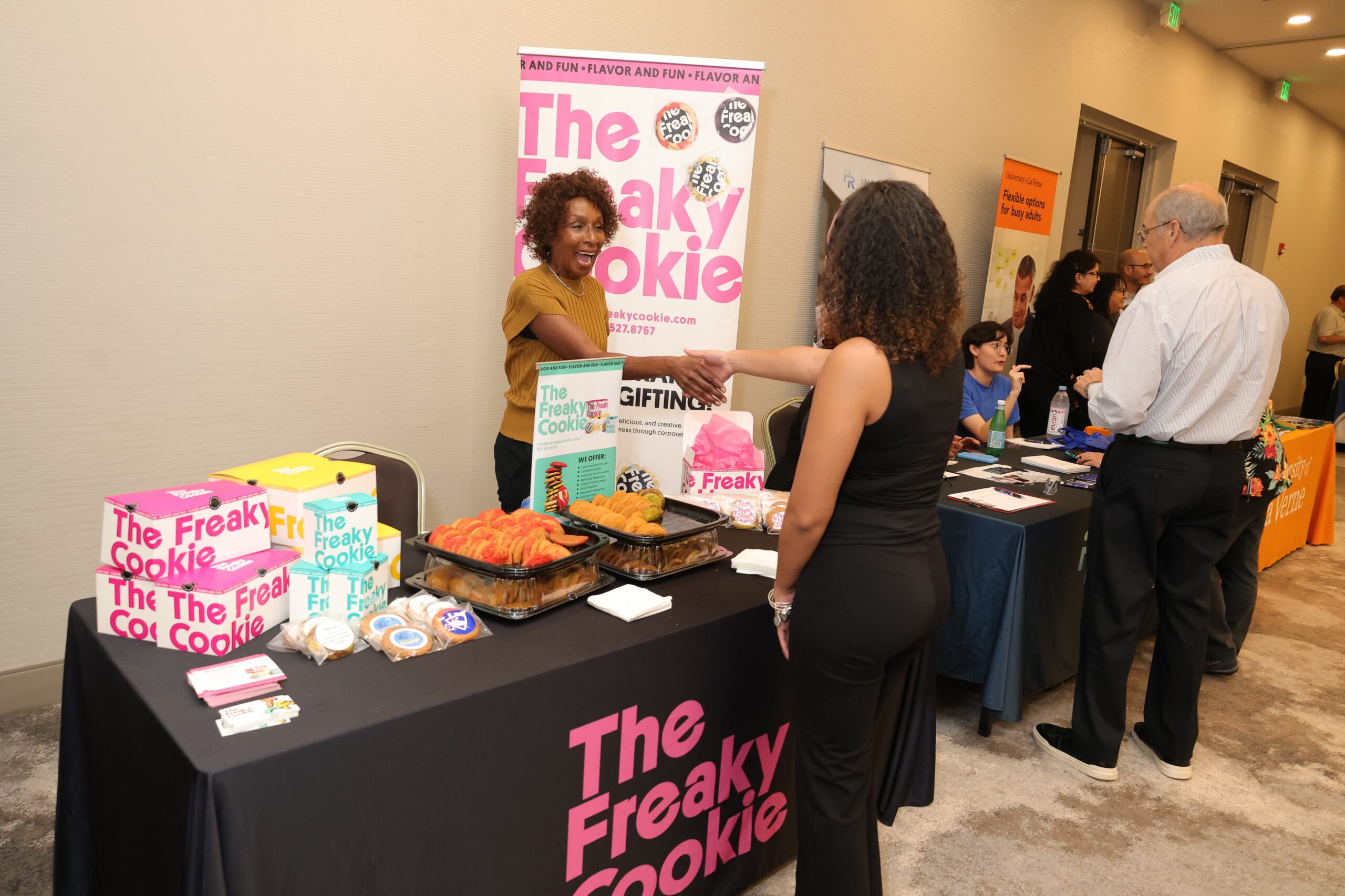
How The Freaky Cookie Grew with Chamber Support: A WBENC Success Story in the Inland Empire
At the Inland Empire Regional Chamber of Commerce (IERCC), we pride ourselves on championing business growth and recognizing the powerful stories of our members. One standout example is Sheila Cavalier, founder of The Freaky Cookie—a fun and rebellious cookie catering company she launched in 2018 alongside her son, Marcus.
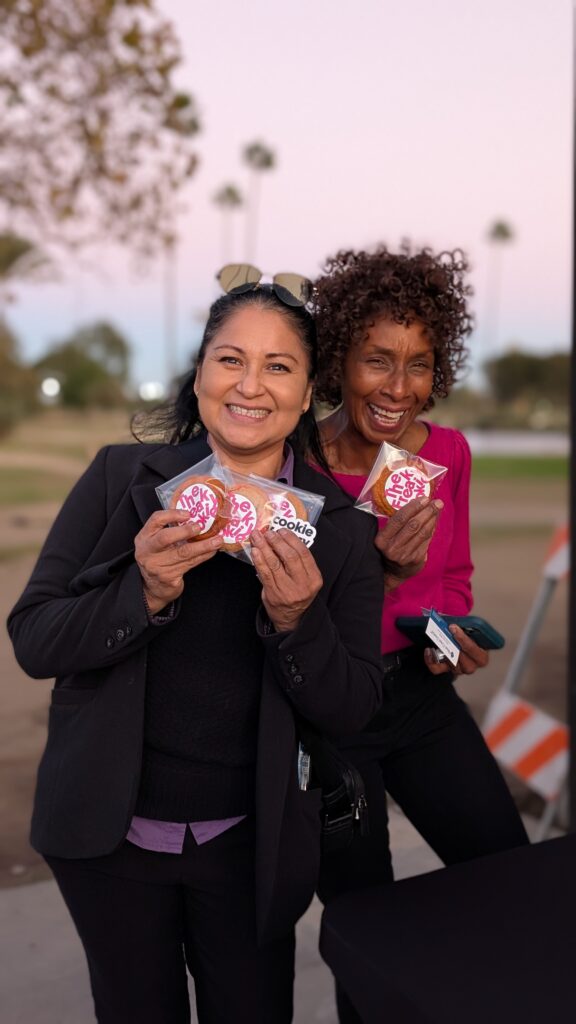
What began as a direct-to-consumer venture has grown into a business-to-business powerhouse, fueled by innovation, strategy, and strong community ties. The Freaky Cookie specializes in custom-labeled, individually wrapped cookies for corporate gifts, bulk orders, and special events. Their nostalgic family recipe, dating back over 90 years, delivers both flavor and flair. As Cavalier puts it, “There’s never not a need for a large amount of cookies.”
Recognizing a unique market opportunity during the pandemic, Sheila pivoted the business model to focus on custom-branded cookies—meeting the surge in demand for individually packaged baked goods that also serve as creative marketing tools. “Corporations were tired of traditional marketing,” she recalls. “Our custom-labeled cookies became a fun, fresh alternative.”
In 2022, Sheila connected with IERCC President Edward Ornelas Jr. during the Multi-Chamber Mixer at Ontario International Airport. That meeting led to The Freaky Cookie joining IERCC, which soon opened doors to strategic partnerships and increased visibility. Through the chamber’s vast network and advocacy, Sheila has built relationships with organizations such as Bank of America, Fifth Third Bank, Top Golf, and Southwest Airlines, which featured The Freaky Cookie in their 50th Anniversary celebration at ONT.
“The IERCC has been a warm and welcoming space,” Cavalier said. “Having the chamber validate our business really means something. It’s helped us get our foot in the door with so many great companies.”
The impact has been tangible. With increased revenue and expanded operations, The Freaky Cookie is no longer just a clever name—it’s a growing force in regional commerce. As Sheila puts it, her goal now is simple but powerful: “Deliver smiles.”
|
Business Journal Newsletter
|


-

 Bizz Buzz4 months ago
Regency Centers Unveils Oak Valley Village: A New Retail Hub Coming to Beaumont, CA
-

 Technology5 months ago
LA Tech Week Highlights Southern California’s Expanding Tech Ecosystem
-

 Entertainment5 months ago
ROI: Return on Insanity—Lucha VaVoom’s High-Yield Investment in the Pomona Arts Colony
-

 Transportation4 months ago
Regional Leaders Launch “Coalition for Our Future” to Advance Urgent Safety Solutions for I-15 Corridor
-

 Travel & Tourism4 months ago
Fly Ontario, Calif., to Honolulu aboard Southwest Airlines starting in June
-

 Food & Lifestyle6 months ago
Fogo de Chão Heats Up Rancho Cucamonga Dining Scene