
Transportation
Brightline and Siemens Mobility Showcase Newest Trainsets for Orlando Expansion on Eve of their Travel to Florida

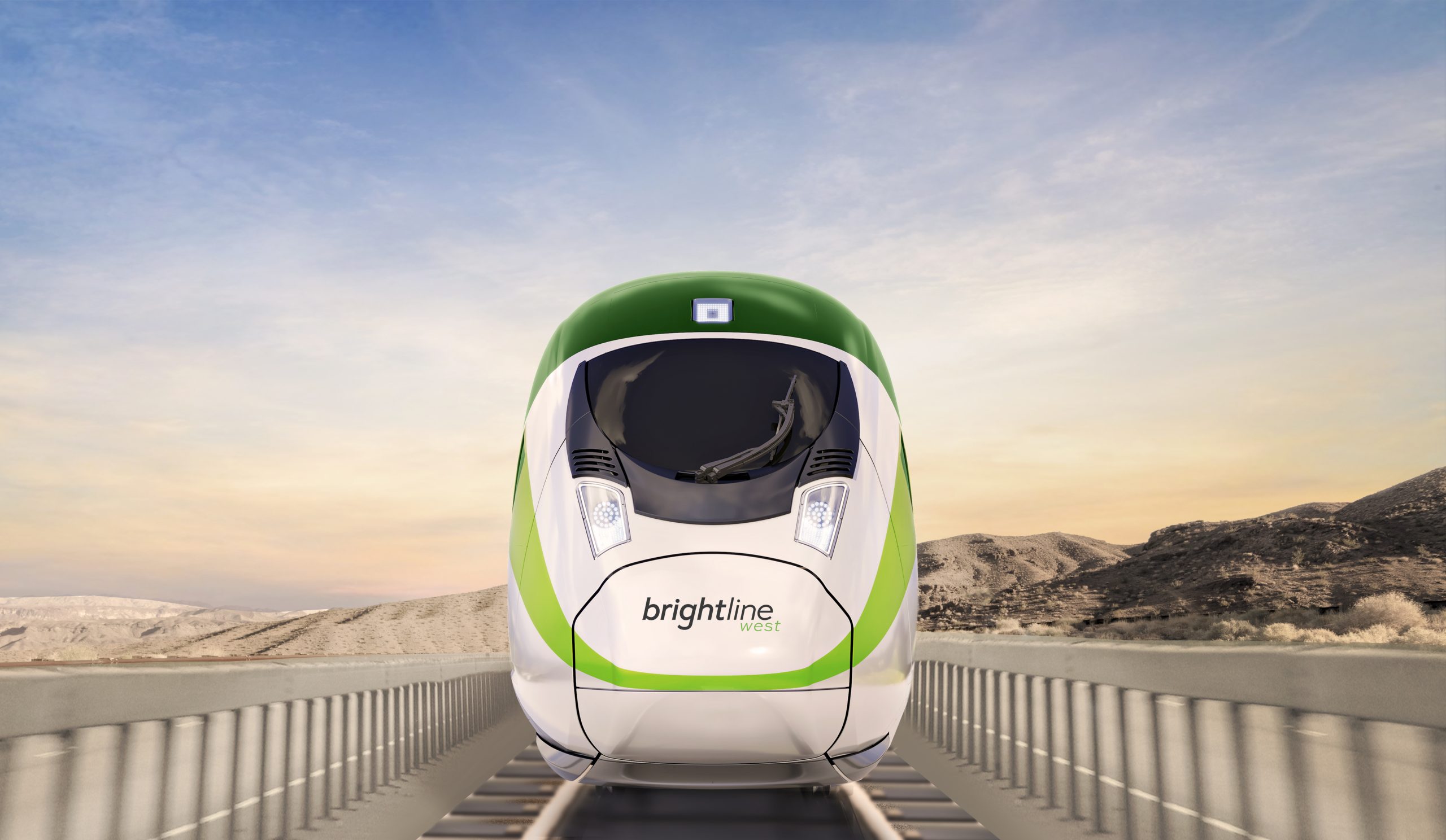
Brightline’s Future Modern, High-Speed Passenger Coaches Begin Rolling Off the Line at Siemens Mobility Headquarters—Symbolizing Multi-Billion Dollar Commitment to American Infrastructure
Brightline, the only provider of modern, eco-friendly high-speed rail, and Siemens Mobility, today celebrated the completion of Brightline’s newest trainsets, which will roll off the assembly line at the Siemens Mobility North American manufacturing headquarters and prepare to begin passenger operations. In the upcoming days, the newest train will depart the factory on a cross-country excursion to West Palm Beach, FL where it will be stationed in preparation for Brightline’s high-speed rail corridor expansion, set to connect Orlando to Brightline’s current route from Miami to West Palm Beach.
At the event, executives from Brightline and Siemens Mobility were joined by California Treasurer Fiona Ma to unveil the new passenger coaches and locomotives, part of the Venture trainset that is the driver of next-generation inter-city rail service in the U.S. Manufactured at Siemens Mobility solar-powered plant in Sacramento, the Venture trainsets for Brightline consist of two Charger Diesel-electric locomotives, one on each end, and four passenger coaches. The Charger Diesel-electric locomotives fulfill the EPA’s stringent Tier 4 emissions standards.
The stainless-steel coaches are made with components from more than 160 suppliers across 27 states. They are designed for luxury and comfort, featuring special ergonomic seating, contemporary communication systems and enhanced Wi-Fi. Thanks to wide aisles, wheelchair storage, and fully accessible restrooms, the Venture trainset exceeds ADA requirements from end to end.
“As the nation’s first and only private, operational high-speed rail line, Brightline’s partnership with Siemens demonstrates our company’s commitment to building both a robust domestic manufacturing sector and the future of green transportation,” said Michael Reininger, chief executive officer of Brightline Holdings. “Our partnership should serve as a powerful example of how we can break through the inertia and into an era of high-speed rail in America.”
“Brightline is a pioneer in private rail investment in the United States and we are proud to continue to grow our partnership as we ship the latest trainsets to Florida ahead of Brightline’s expansion. The Venture trainsets are a result of our collaboration and will offer a comfortable and enjoyable passenger experience that was built in Sacramento,” stated Michael Cahill, President of Siemens Mobility Rolling Stock in North America.
“The Siemens-Brightline partnership is a huge win for the state of California, bringing the future of green manufacturing and good paying jobs to our communities,” said Fiona Ma, California treasurer. “The completion of these trainsets is not only a big step towards developing high speed rail in the U.S., but also proves that California is capable of achieving tangible progress on climate and creating new manufacturing jobs today—not years from now.”
With more than 2,100 employees, Siemens Mobility’s Sacramento manufacturing facility serves as the North American Rolling Stock Manufacturing Headquarters for Siemens Mobility, an international leader in providing advanced rail transportation for systems around the world. The facility designs, engineers and manufactures across the entire spectrum of rolling stock including commuter and regional passenger trains, light rail and streetcars, locomotives, passenger coaches, and trainsets.
Construction on Brightline’s forthcoming 170-mile service extension from West Palm Beach to the Orlando International Airport is more than 60 percent complete and is on track for completion in late 2022. The project has been an economic boom for the state of Florida. In partnership with Siemens Mobility, the newest trainsets represent Brightline’s commitment to invest billions in American infrastructure, creating the country’s first and only private high-speed rail network. Brightline Florida employs more than 1,300 daily construction workers and will create more than 10,000 jobs over the construction period and the first few years of operations. In total, Brightline will generate more than $6.4 billion in economic impact in the state of Florida.
Brightline will resume its operations between Miami, Fort Lauderdale, and West Palm Beach in November. Stations in Boca Raton and Aventura are expected to open in the second half of 2022, and discussions are underway with local stakeholders regarding expansions to Disney Springs and Tampa.
Siemens Mobility and Brightline are also in discussions on supplying Brightline’s technology solutions for its future high-speed Brightline West operations. Brightline West is the most advanced and shovel-ready high-speed rail project in the nation and is poised to bring economic and environmental benefits to the region. It will utilize fully electric, zero-emission trains to connect Las Vegas and Los Angeles through multiple intercity projects.












Transportation
Regional Leaders Launch “Coalition for Our Future” to Advance Urgent Safety Solutions for I-15 Corridor
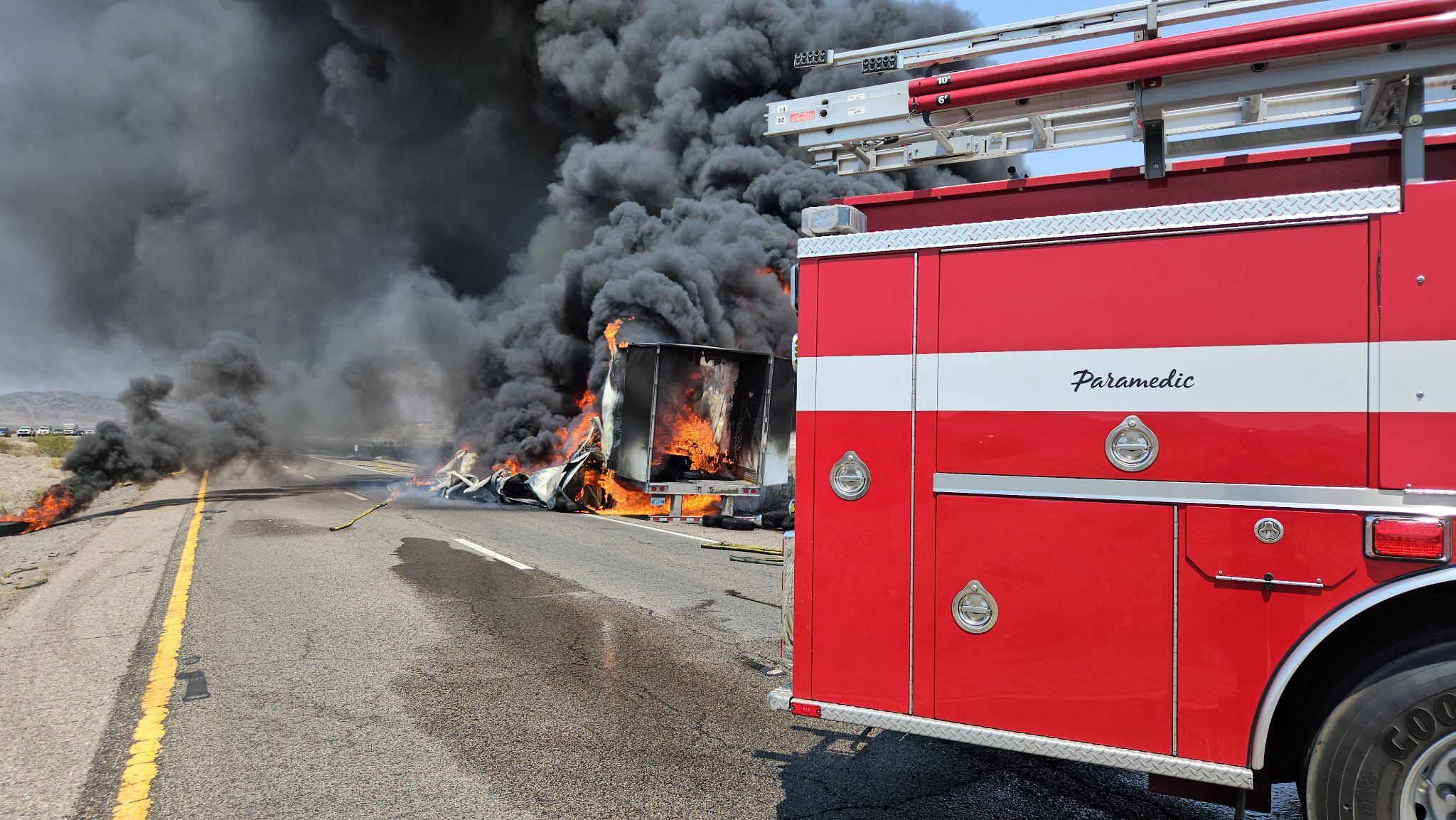
Coalition for Our Future announces feasibility study to fast-track improvements on one of California’s most dangerous highways
The Coalition for Our Future – a partnership of regional business, labor and California port leaders – today announced a coordinated push to make Interstate 15 (I-15) safe and more reliable for residents, workers and businesses. The California-Nevada coalition will work through the Caltrans process to launch a feasibility study focused on improving safety and mobility along the corridor. The effort builds on earlier collaboration to identify safety issues and advance long-term solutions that protect families, first responders and freight.
“The I-15 corridor is of regional significance for its impact on Southern California’s economy. I-15 moves billions in goods and connects people, jobs and opportunity across the Southwestern United States,” said Kome Ajise, executive director of Southern California Association of Governments (SCAG). “Improving safety and mobility on I-15 will boost regional competitiveness, support sustainable growth, and deliver lasting economic benefits locally, regionally, and nationally.”
The 18-month study will include collaboration with local and state transportation representatives to assess and prioritize needed improvements. Once complete, the study’s recommendations can be incorporated into the regional transportation plan, making the project eligible for state and federal funding to advance critical safety upgrades.
San Bernardino County Supervisor Curt Hagman said local communities understand the urgency. “Public safety is my top priority, and no one understands the risks better than High Desert families who drive the I-15 every day,” Hagman said. “They’ve seen the crashes, the closures, and the wages lost when traffic grinds to a halt. I support expediting the planning process so that solutions can move efficiently from paper to pavement.”
I-15 has one of the highest rates of serious and fatal crashes in California, with 1,033 crashes causing injuries or deaths between 2020 and 2024, nearly identical to the previous five-year period, according to the Transportation Injury Mapping System (TIMS) at UC Berkeley. On average, someone is hurt or killed every three days between Barstow and Las Vegas, and congestion often slows first responders during the critical “golden hour” – the window of time when quick medical care can save lives.
“Seconds matter in an emergency,” said Fire Chief Dan Munsey of the San Bernardino County Fire Protection District. “There’s only one fire station along that isolated stretch of highway, yet our crews serve what’s essentially a city’s worth of daily travelers. When crashes close lanes or gridlock traffic, it slows response times and puts lives at risk. Faster clearances and fewer closures mean we can reach victims sooner and get them the care they need.”
Recent I-15 closures demonstrate how disruptive and costly delays can be. The 43-hour shutdown near Baker in 2024 stranded thousands in extreme heat and cost Southern California an estimated $106.7 million as responders contained a lithium-ion fire and delivered aid through stalled traffic.
I-15 is also vital to the region’s economy. In San Bernardino County alone, activity along the corridor contributes more than $3.3 billion annually and supports 13,600 jobs, with major benefits to local manufacturing, logistics and tourism.
Connecting the Ports of Los Angeles and Long Beach to the nation, I-15 is a critical freight artery for the western United States. Nearly 7,500 trucks travel the Los Angeles-Las Vegas route each day, carrying goods that power regional and national economies. Congestion between the two regions costs an estimated $3 billion annually, and each hour of closure adds another $1.1 million in economic losses to Southern California.
With support from federal, state and local leaders, the Coalition for Our Future is working to transform I-15 into a next-generation transportation and logistics corridor that sets a national standard for safety, reliability and climate-friendly innovation. The group is committed to accelerating projects that reduce crashes, shorten delays and keep freight and travelers moving safely through one of the West’s busiest corridors.
“Closures and delays on I-15 ripple through every community – missed shifts, late deliveries, longer commutes,” said Jon Switalski, executive director of the Coalition for Our Future and Rebuild SoCal. “Rebuild SoCal is focused on turning that frustration into progress by partnering with Caltrans and local agencies to deliver safer, more efficient mobility for everyone.”
Transportation
Brightline West Breaks Ground on America’s First High-Speed Rail Project Connecting Las Vegas to Rancho Cucamonga
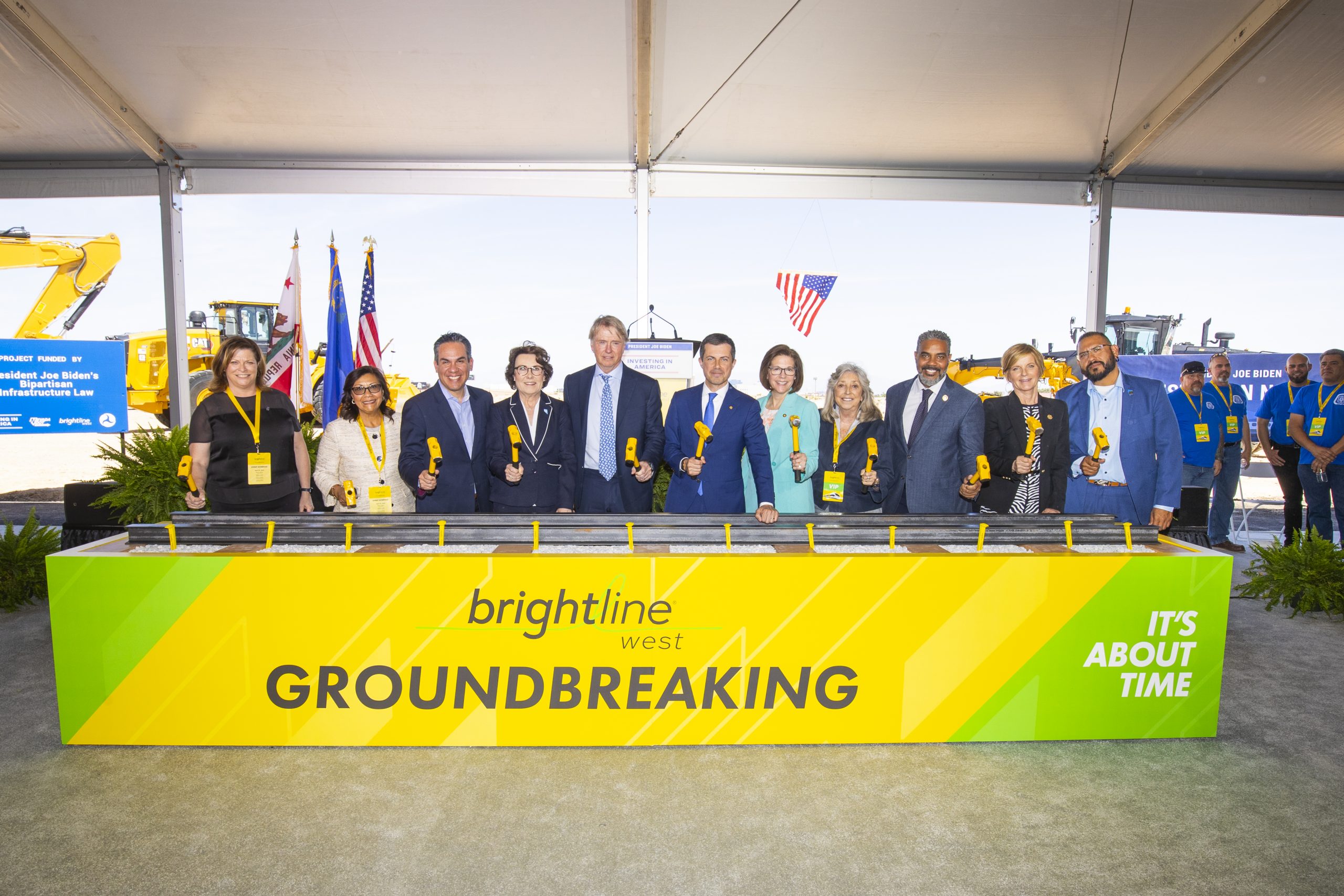
Officials Hammer the First Spike Commemorating the Groundbreaking for Brightline West
Today, Brightline West officially broke ground on the nation’s first true high-speed rail system which will connect Las Vegas to Southern California. The 218-mile system will be constructed in the middle of the I-15 and is based on Brightline’s vision to connect city pairs that are too short to fly and too far to drive. Hailed as the greenest form of transportation in the world, Brightline West will run zero emission, fully electric trains capable of speeds of 200 miles per hour. Brightline West is a watershed project for high-speed rail in America and will establish the foundation for the creation of a new industry and supply chain. The project was recently awarded $3 billion in funding from President Biden’s Bipartisan Infrastructure Bill. The rest of the project will be privately funded and has received a total allocation of $3.5 billion in private activity bonds from USDOT.
The groundbreaking included remarks from U.S. Transportation Secretary Pete Buttigieg, Brightline Founder Wes Edens, Nevada Gov. Joe Lombardo, Sen. Catherine Cortez, Sen. Jacky Rosen, California Rep. Pete Aguilar, Senior Advisor to President Biden Steve Benjamin and Vince Saavedra of the Southern Nevada Building Trades. In addition, Nevada Reps. Dina Titus, Susie Lee and Steve Horsford and California Rep. Norma Torres joined the celebration. More than 600 people, including union representatives, project supporters and other state and local officials from California and Nevada, attended the event.
“People have been dreaming of high-speed rail in America for decades – and now, with billions of dollars of support made possible by President Biden’s historic infrastructure law, it’s finally happening,” said Secretary Buttigieg. “Partnering with state leaders and Brightline West, we’re writing a new chapter in our country’s transportation story that includes thousands of union jobs, new connections to better economic opportunity, less congestion on the roads, and less pollution in the air.”
“This is a historic project and a proud moment where we break ground on America’s first high-speed rail system and lay the foundation for a new industry,” said Wes Edens, Brightline founder. “Today is long overdue, but the blueprint we’ve created with Brightline will allow us to repeat this model in other city pairs around the country.”
CONSTRUCTION OF BRIGHTLINE WEST
Brightline West’s rail system will span 218 miles and reach speeds of 200 mph. The route, which has full environmental clearance, will run within the median of the I-15 highway with zero grade crossings. The system will have stops in Las Vegas, Nev., as well as Victor Valley, Hesperia and Rancho Cucamonga, Calif.
The privately led infrastructure project is one of the largest in the nation and will be constructed and operated by union labor. It will use 700,000 concrete rail ties, 2.2 million tons of ballast, and 63,000 tons of 100% American steel rail during construction. Upon completion, it will include 322 miles of overhead lines to power the trains and will include 3.4 million square feet of retaining walls. The project covers more than 160 structures including viaducts and bridges. Brightline West will be fully Buy America Compliant.
STATIONS AND FACILITIES
Brightline West will connect Southern California and Las Vegas in two hours or almost half the time as driving. The Las Vegas Station will be located near the iconic Las Vegas Strip, on a 110-acre property north of Blue Diamond Road between I-15 and Las Vegas Boulevard. The site provides convenient access to the Harry Reid International Airport, the Las Vegas Convention Center and the Raiders’ Allegiant Stadium. The station is approximately 80,000 square feet plus parking.
The Victor Valley Station in Apple Valley will be located on a 300-acre parcel southeast of Dale Evans Parkway and the I-15 interchange. The station is intended to offer a future connection to the High Desert Corridor and California High Speed Rail. The Victor Valley Station is approximately 20,000 square feet plus parking.
The Rancho Cucamonga Station will be located on a 5-acre property at the northwest corner of Milliken Avenue and Azusa Court near Ontario International Airport. The station will be co-located with existing multi-modal transportation options including California Metrolink, for seamless connectivity to Downtown Los Angeles and other locations in Los Angeles, Orange, San Bernardino and Riverside Counties. The Rancho Cucamonga Station is approximately 80,000 square feet plus parking.
The Hesperia Station will be located within the I-15 median at the I-15/Joshua Street interchange and will function primarily as a local rail service for residents in the High Desert on select southbound morning and northbound evening weekday trains.
The Vehicle Maintenance Facility (VMF) is a 200,000-square-foot building located on 238 acres in Sloan, Nev., and will be the base for daily maintenance and staging of trains. This site will also serve as one of two hubs for the maintenance of way operations and the operations control center. More than 100 permanent employees will report on a daily basis once operations begin and will serve as train crews, corridor maintenance crews, or operations control center teammates. A second maintenance of way facility will be located adjacent to the Apple Valley station.
MARKET
The Las Vegas and Southern California travel market is one of the nation’s most attractive corridors with over 50 million trips between the region each year. Additionally, Las Vegas continues to attract visitors from around the world, with 4.7 million international travelers flying into the destination. The city dubs itself on being the world’s No. 1 meeting destination, welcoming nearly 6 million people to the Las Vegas Convention Center last year.
In California, approximately 17 million Southern California residents are within 25 miles of the Brightline West station sites. Studies show that one out of every three visits to Las Vegas come from Southern California.
ECONOMIC & ENVIRONMENTAL BENEFITS
Brightline West’s $12 billion infrastructure investment will create over $10 billion in economic impact for Nevada and California and will generate more than 35,000 jobs, including 10,000 direct union construction roles and 1,000 permanent operations and maintenance positions. The investment also includes over $800 million in improvements to the I-15 corridor and involves agreements with several unions for skilled labor. The project supports Nevada and California’s climate goals by offering a no-emission mobility option that reduces greenhouse gasses by over 400,000 tons of CO2 annually – reducing vehicle miles traveled by more than 700 million each year and the equivalent of 16,000 short-haul flights. The company will also construct three wildlife overpasses, in partnership with the California Department of Fish and Wildlife and Caltrans for the safe passage of native species, primarily the bighorn sheep.
BRIGHTLINE FLORIDA
Brightline’s first rail system in Florida connecting Miami to Orlando began initial service between its South Florida stations in 2018. In September 2023, Brightline’s Orlando station opened at Orlando International Airport, connecting South Florida to Central Florida. The company has plans to expand its system with future stops in Tampa, Florida’s Space Coast in Cocoa and the Treasure Coast in Stuart.
Transportation
President Biden Joins Officials in Las Vegas to Announce $3B Grant for Nevada Department of Transportation for Brightline West
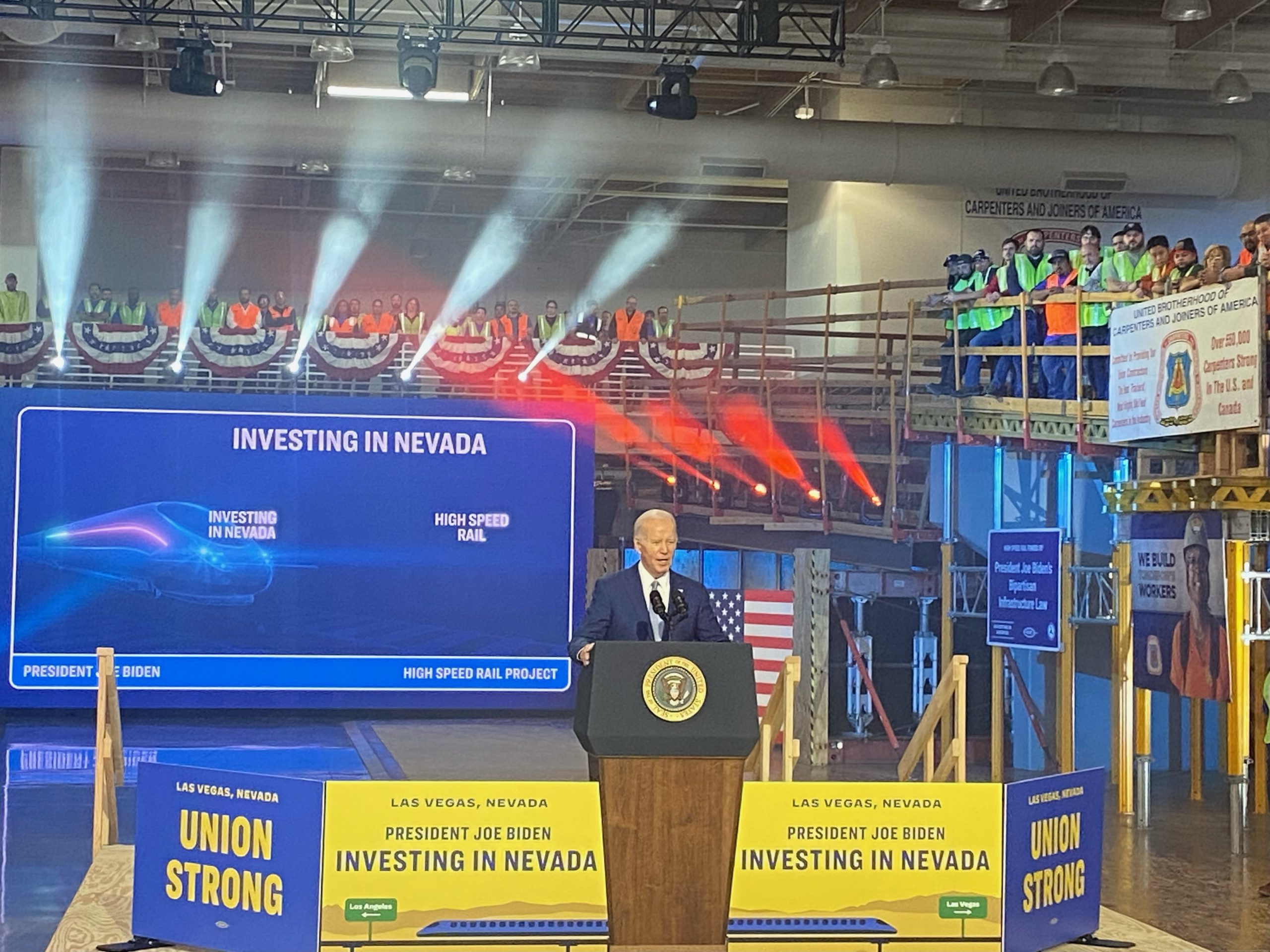
America’s First High-Speed Rail Project will Connect Las Vegas and Southern California
President Joe Biden joined elected officials from Nevada and California to formally announce that the Nevada Department of Transportation (NDOT) has received $3 billion in funding from the Federal-State Partnership for Intercity Passenger Rail Grant Program for Brightline West. Brightline West will connect Las Vegas and Southern California and will be the nation’s first true high-speed rail system. The project will also be the first to be built with American union labor. The fully-electric, zero-emission system will become one of the greenest forms of transportation in the U.S.
President Biden was joined by Nevada officials including Governor Joe Lombardo, Senators Jacky Rosen and Catherine Cortez Masto, Representatives Dina Titus, Susie Lee and Steven Horsford. Also in attendance were representatives from the High Speed Rail Labor Coalition and the Nevada Building Trades.
Brightline West’s modern, eco-friendly system will redefine train travel in America and connect two of the most iconic destinations: Las Vegas and Southern California. This 218-mile passenger rail service will reach speeds up to 200 mph with no grade crossings and the alignment is within the median of the I-15 highway. The system will feature three full-service stations in Las Vegas, Victor Valley and Rancho Cucamonga, Calif.
The Las Vegas station will include mobility connections and easy access to the Las Vegas Strip, the Raiders’ Allegiant Stadium and the Las Vegas Convention Center. The flagship Las Vegas station will be on 110 acres at the south end of Las Vegas Blvd. Brightline West’s California stations will include Victor Valley and Rancho Cucamonga, with direct connectivity via California Metrolink to key points in Los Angeles, such as Union Station.
Brightline West’s $12 billion project will bring widespread benefits including more than $10 billion in economic impact to Nevada and California. Economic studies show the project will create more than 35,000 (direct and indirect) jobs including 10,000 direct union construction jobs and nearly 1,000 permanent jobs for operations and maintenance. Brightline West’s investment also includes more than $800 million in roadway improvements to the I-15 corridor. Brightline West has agreements in place with several unions for the use of highly skilled union labor in critical jobs required to build, operate and maintain the project.
The project’s environmental benefits are equally impressive and designed to support Nevada and California’s climate strategies by promoting a no-emission mobility option that lowers greenhouse gasses by more than 400,000 tons of CO2 each year. The diversion of people from auto and air travel to Brightline West’s high-speed rail system reduces vehicle miles traveled by more than 700 million each year and 16,000 short haul flights annually.
The $3 billion grant award marks the largest in NDOT’s history and is the culmination of more than two decades of planning and coordination to build a high-speed rail line between Las Vegas and Southern California. NDOT, as the grant administrator, will continue to play an important oversight role as Brightline West constructs the rail system. Additionally, NDOT will be responsible for the design, construction, and oversight of any NDOT infrastructure that requires modification as a result of Brightline West’s work.
|
Business Journal Newsletter
|


-
 Bizz Buzz4 months ago
Regency Centers Unveils Oak Valley Village: A New Retail Hub Coming to Beaumont, CA
-

 Technology6 months ago
LA Tech Week Highlights Southern California’s Expanding Tech Ecosystem
-

 Entertainment5 months ago
ROI: Return on Insanity—Lucha VaVoom’s High-Yield Investment in the Pomona Arts Colony
-
 Transportation4 months ago
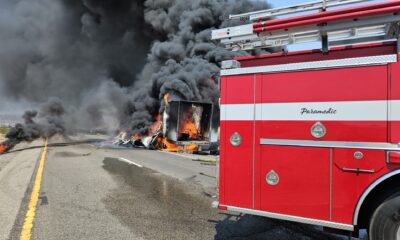
Regional Leaders Launch “Coalition for Our Future” to Advance Urgent Safety Solutions for I-15 Corridor
-
 Travel & Tourism4 months ago
Fly Ontario, Calif., to Honolulu aboard Southwest Airlines starting in June
-
 Food & Lifestyle6 months ago
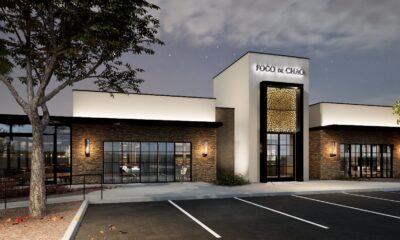
Fogo de Chão Heats Up Rancho Cucamonga Dining Scene