
Community
Barstow, California–No Reason for Second Guessing


Barstow’s civic, business and government leaders want to know what kind of business amenities its residents want. They are sending out a survey with email blasts and social media posts they say will arm them with a forceful tool to boost local development.
The survey, developed by Barstow Community College, now widely distributed by school, government, civic, and business leaders, “will help get Barstow a second look” from crucial business decision-makers, said Mayor Paul Anthony Courtney.
The 22-question survey is an effort to determine what kinds of businesses residents want in the 112-acre, fully approved specific plan known as The Shops at Spanish Trail, located at the interchange of Avenue L and Interstate 15. The average daily traffic count adjacent to the 800,000-square-foot project is 86,000 vehicles.
“The survey will help create a better Barstow through an inclusive approach for shaping our future,” Courtney said.
“I really believe that all of the leadership within the Barstow region and the rest of the High Desert needs to know more about our citizens in Barstow, what they are looking for, what type of shopping experience they want and what activities are essential for them. I believe that working together, we can accomplish a lot in the Mojave River Valley,” said Joseph W. Brady, CCIM, SIOR, Managing Member of Barstow Spanish Trail LLC
Eva Bagg, Barstow Community College president-superintendent, said, “we see the development project as not only a brick in the developing foundation of economic development for Barstow, but also a part of a longer-term vision of creating spaces for residents that enhance the quality of living for people, so they don’t so often feel the need to travel outside of Barstow and ‘down the hill’ to find those experiences.”
Senior housing assisted living, and market-rate multi-family rentals as among the potential land uses.
Brady said he is pursuing both Hispanic and traditional grocery stores and has already completed a thorough grocery store study to help market the project.
“It shows the need for an additional grocery outlet to service Barstow,” Brady said.
Other retail uses could include health and fitness providers, auto services, furniture, household items, indoor recreational activities, and locally sourced goods. Among other questions, the survey asks which retailers, restaurants, hotels, and recreational outlets residents would like to see in the project.
“The project is located with great exposure to travelers and is revitalizing the West End of Barstow that has not been promoted well for decades,” said Ken Young, Barstow Community College interim director of maintenance and operations and a lifelong Barstow resident.
Barstow Area Chamber of Commerce and Barstow Community College is joining Brady’s Victorville-based, The Bradco Companies, in an informal partnership to develop and conduct the survey. The college will compile the survey results, officials said.
Said Eugene Butticci, Executive Director of the Barstow Area Chamber of Commerce: “Regardless of what gets built here, it needs to be geared to and supported by residents. We need to find out what they want and not second-guess.”
“The chamber posted the survey on its Facebook page, sent out an email blast to some 2,000 in addition to emailing the survey to its members”, Butticci said.
“Barstow Community College distributed the survey to staff and students via its internal email system and posted it on its social media accounts,” said Amanda Simpson, the spokeswoman.
Brady said his Victorville-based The Bradco Companies is sending out numerous email blasts and mailing the study’s announcement and QR Code to access it to 1,600 business owners in Barstow.
“We understand the challenges Barstow has had trying to attract development,” Brady said, adding that the survey could become an annual occurrence.


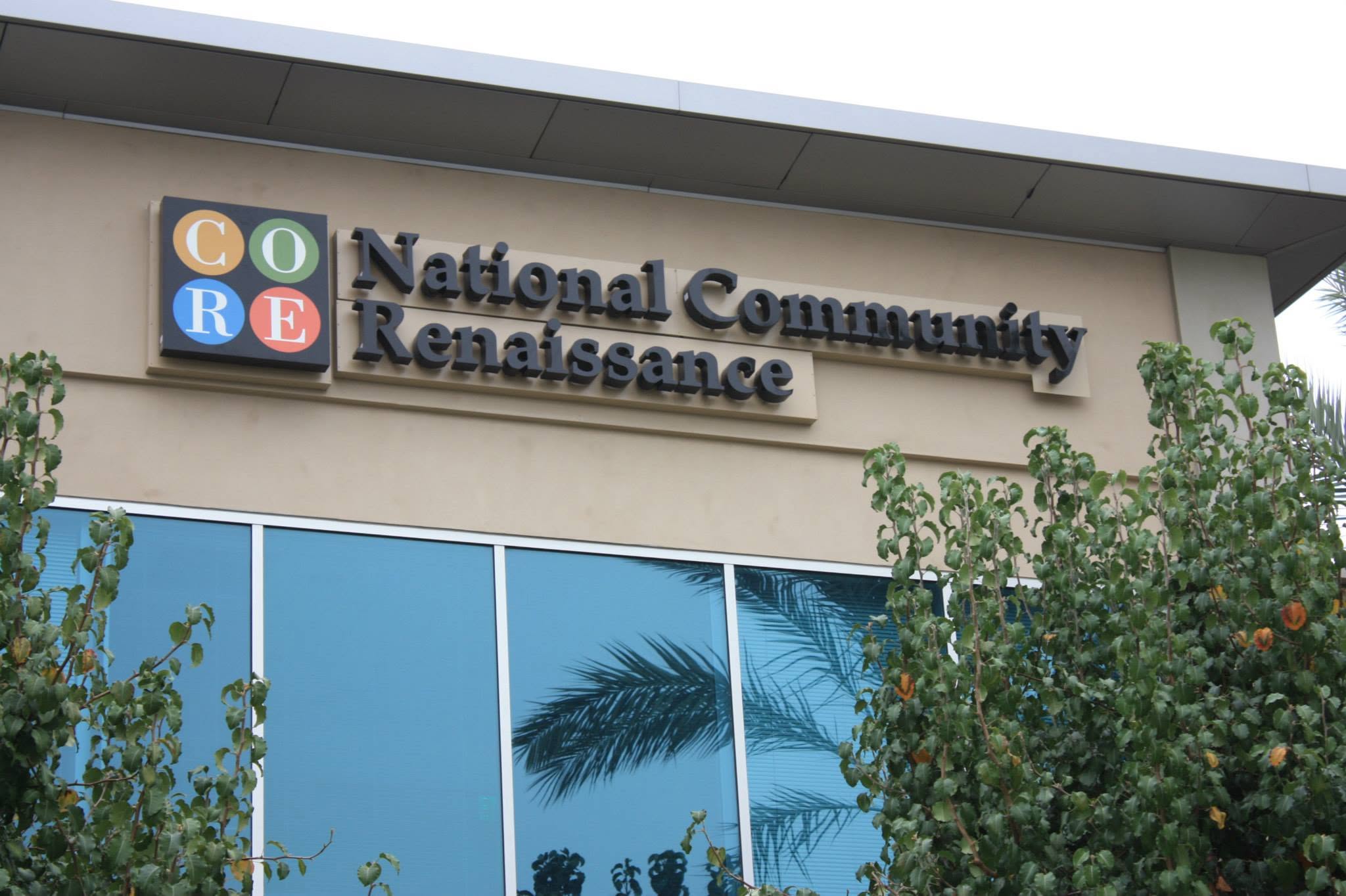
Proposed HOPE Act aims to unlock private investment, rehabilitate existing affordable housing, and protect long-term affordability nationwide
National CORE is voicing strong support for newly introduced federal legislation that could significantly expand the nation’s ability to preserve aging affordable housing while encouraging long-term private investment in rehabilitation projects.
Introduced on July 2 by U.S. Representative Mike Carey (R-Ohio), the Housing Opportunities and Preservation (HOPE) Act would establish a new federal tax framework designed to finance the preservation and rehabilitation of existing affordable rental housing. Housing advocates say the proposal addresses one of the most pressing challenges facing communities nationwide: maintaining affordable housing that is rapidly aging while preventing the displacement of low-income residents.
According to the National Low Income Housing Coalition, the United States currently faces a shortage of 7.2 million affordable and available rental homes for extremely low-income households. At the same time, the average federally assisted rental property is now 36 years old, and nearly 375,000 affordable homes are expected to lose their affordability protections within the next five years.
“The HOPE Act would unlock a major new private funding source for preserving our aging housing stock,” said National CORE President Mike Ruane. “It’s an innovative approach to one of the stickiest challenges in affordable housing—how to preserve the nation’s aging affordable housing for future generations.”
National CORE has been actively engaged in advancing affordable housing preservation efforts. Over the past year, the organization has collaborated with Novogradac & Company and a broad coalition of nonprofit housing developers, preservation advocates, finance experts, and policy leaders to explore innovative financing strategies that support long-term preservation.
The coalition believes preserving existing affordable housing must become a central component of any comprehensive strategy to address the nation’s housing crisis. Renovating existing communities is often more cost-effective than building new housing, while also allowing families, seniors, veterans, and individuals with disabilities to remain in stable communities rather than face displacement.
If enacted, the HOPE Act would create new incentives for private investors by establishing tax benefits for qualified affordable housing preservation projects. Eligible developments would be required to be at least 15 years old, undergo substantial rehabilitation, and remain affordable to low-income households for a minimum of 20 years. Eligible property owners would include nonprofit organizations, public housing agencies, tribal housing authorities, and state and local governments.
Michael Novogradac, Managing Partner of Novogradac & Company, said the legislation complements recent federal efforts to expand affordable housing development.
“While Congress’ permanent expansion of the Low-Income Housing Tax Credit last year is historic and critical for affordable rental housing, especially for new construction, the nation’s need for preservation outstrips these expanded resources,” Novogradac said. “This bill provides nonprofit owners of rental housing a flexible financing tool targeted to individual investors to address the growing national need to preserve the nation’s affordable rental housing stock.”
Affordable housing advocates also emphasize that preserving existing communities protects vulnerable populations while strengthening neighborhoods over the long term.
“We need to preserve existing homes so low-income seniors, working families, and people with disabilities can continue to remain in high-quality apartments and not be displaced,” said Aaron Gornstein, President and CEO of Preservation of Affordable Housing (POAH). “The HOPE Act will expand private sector investment so that more affordable homes can be renovated by nonprofit organizations that commit to long-term affordability requirements.”
The legislation has been referred to the House Ways and Means Committee, where Rep. Carey serves as a member. If approved, housing leaders believe the HOPE Act could become one of the most significant federal preservation initiatives in recent years, providing nonprofit housing organizations with a dedicated financing tool to modernize aging properties while ensuring affordable housing remains available for generations to come.
Commercial Real Estate
Court Appoints Receiver to Oversee Former American Sports University Dormitory in San Bernardino

The San Bernardino Superior Court has placed the former American Sports University Dormitory, located at 340 West Fourth Street under receivership. In a ruling dated January 18, 2024, Judge Thomas Garza appointed Richardson Griswold of Griswold Law in Encinitas as Receiver.
“We are pleased that Judge Garza has granted our motion to appoint a Receiver,” said San Bernardino City Manager Charles Montoya. “He agreed that the site conditions have likely worsened since we made our initial request for a receiver a year ago and the property poses a danger to the community.”
Under the powers granted by the Court, Griswold is authorized 1) to rehabilitate the property; 2) demolish the building, or 3) sell the property to an entity who will promptly undertake the rehabilitation and correct the identified deficiencies and violations.
Receiver Richardson “Red” Griswold has extensive experience as a court appointed receiver. He has been appointed by over 180 California courts in 21 different California counties, including appointments related to health & safety, rents, post-judgment, and partition matters. Griswold also acts as an expert witness in cases involving habitability standards. He will report directly to Judge Garza and will enforce the judge’s orders to protect the building from additional break-ins and damage.
In its ruling, the court found “the substandard conditions on the Subject Property are ongoing and will likely persist unless this Court appoints a receiver to take possession of the Subject Property and undertake responsibility for its rehabilitation.”
The court found that the property is a public nuisance and is being maintained in a manner that violates State and local laws. The violations at the property are so extensive and of such a nature that the health and safety of neighboring residents and the general public is substantially endangered.
The court stated that the property owners did not comply with City issued notices and orders to correct the substandard conditions, despite being afforded a reasonable opportunity to correct the conditions.
The court also ordered that Ji Li, Fox Property Holdings, and its representatives are prohibited from entering the building without the Receiver’s permission, making any changes to existing insurance policies, selling or encumbering the building, or collecting rents or other income from the building.
The property at 340 West 4th Street has been a challenging property for several years. Used as an unpermitted housing facility by Ji Li and Fox Property Holdings, tenants were subjected to unsafe and unlivable conditions including black mold, inoperative fire alarms and sprinklers, blocked fire escapes, and insect and rodent infestations.
San Bernardino had been working through the Civil Court process to take control of the building the past eighteen months. In that time, Ji Li and Fox Property Holdings of Irwindale, have ignored court orders, including a September 2022 Temporary Restraining Order requiring them to pay to relocate tenants and make all required repairs to the building.
Due to the unsafe conditions, on August 17, 2023, the City of San Bernardino red tagged the building, relocating the tenants that still remained. Despite boarding up the property, there have been repeated fires and break-ins.
Community
San Manuel Orange County Golf Tournament Raises $425,000 for Five Tribal, Local & National Nonprofits

24th Annual Tournament Recognizes O.C. based Meals on Wheels and Radiant Futures Among Others
The San Manuel Band of Mission Indians, Tribal leaders, business and community partners united for this year’s annual golf tournament to raise $425,000 for tribal, local and national nonprofits, making it the largest year for funds raised at the annual event. The San Manuel Band of Mission Indians has donated more than $3 million to 50 nonprofit organizations as a result of its annual golf tournament. The tournament was the first Tribal event at Waldorf Astoria Monarch Beach Resort & Club since the San Manuel Band of Mission Indians acquired an interest in the property earlier this year.
The annual event commenced on July 16 with a celebration and a check presentation of $85,0000 each to five inspiring tribal, local and national nonprofits. The following nonprofits were awarded: Lakota Waldorf School on the Pine Ridge Indian Reservation in southwestern South Dakota dedicated to providing an exemplary education to reservation students while incorporating their culture; Voices for Children which serves children in Riverside and San Diego County who are in foster care by providing court appointed special advocates; Citrus Counseling Services located in Redlands which provides mental health services at low or no cost; Radiant Futures of Orange County provides crisis support, services for survivors, and education to prevent domestic violence and human trafficking; and Meals on Wheels OC which provides programming to nourish the wellness of senior citizens in Orange County.
San Manuel Band of Mission Indians Chairwoman, Lynn Valbuena, says she is moved by the community’s commitment to providing a hand up to nonprofits that are dedicated to making a difference regionally and throughout Indian Country.
“Each year I stand in awe of the thoughtfulness and generosity of our sponsors and partners to continue San Manuel’s mission of supporting organizations that are truly the boots on the ground for making our world a better place,” said San Manuel Chairwoman, Lynn Valbuena. “These five nonprofits are improving the lives of so many Native Americans, as well as local communities, and we are proud to help. The tournament is one of the many ways San Manuel demonstrates its value of giving back.”
This year, golfers teed off on ocean-view golf courses at Pelican Hill Golf Club in Newport Beach and Waldorf Astoria Monarch Beach Golf Links in Dana Point from Monday, July 17 to Thursday, July 20.
Presenting sponsors of the tournament included Imagine This and PENTA Building Group. Yaamava’ Resort & Casino was also joined by its sports partners from the LA Dodgers, LAFC and the Anaheim Ducks.
Supporting nonprofit organizations is part of the Tribe’s commitment to their Giving Pillar also known as “San Manuel Cares.” For more information on San Manuel Care’s Program, please visit: www.sanmanuelcares.org
|
Business Journal Newsletter
|


-

 Travel & Tourism6 months ago
Ontario International Airport passenger volumes rose for 4th straight month in March while freight shipments grew by 15%
-
 Opinion6 months ago
KTGY Announces Unanimous Approval of Community-Serving Shopping Center in North Redlands, California
-
 Bizz Buzz4 months ago
National CORE Ranked No. 2 Among Nation’s Top Nonprofit Affordable Housing Developers
-
 Business5 months ago
GreenRock Capital and J.P. Morgan Close $103 Million Tax-Exempt Financing for Ontario Hotel and Conference Center
-
Community3 months ago
National CORE Applauds Federal Legislation to Preserve Aging Affordable Housing
-

 Legal2 months ago
How a Landmark Healthcare Antitrust Case Could Affect Inland Empire Providers, Employers, and Patients